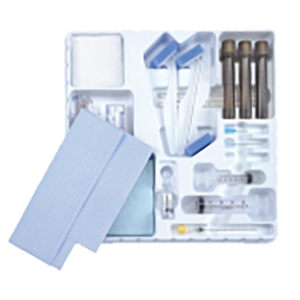
Healthcare facilities face critical decisions when selecting contrast injection systems for diagnostic imaging departments. This buyer’s guide addresses equipment configurations, consumable specifications, regulatory requirements, and financial considerations that influence operational success. Understanding these factors helps radiology directors and procurement teams align technology investments with clinical protocols and budget constraints.
Key Takeaways
- Single-head systems cost $150,000-$300,000 while dual-head systems range from $400,000-$600,000+
- Consumables represent 60.3% of the high-pressure injector market share
- Dual-head configurations reduce contrast usage by 10-18% through automated protocols
- FDA 510(k) clearance and ACR Manual compliance are mandatory safety requirements
- Annual volumes exceeding 6,000 exams per scanner typically justify a dual-head system investment
What are Contrast Power Injector Syringes and Tubing?
Contrast power injector syringes are specialized medical devices designed to deliver precise contrast media volumes into patients’ vascular systems during diagnostic imaging procedures. These syringes connect to automated injection systems that control flow rates, pressure limits, and timing sequences for CT and MRI examinations. The systems ensure consistent contrast delivery that produces diagnostic-quality images while maintaining patient safety standards.
Injector tubing serves as the critical connection between the power injector system and the patient’s intravenous access point. High-pressure tubing must withstand injection forces while maintaining flexibility for proper positioning. Material selection, pressure ratings, and construction quality directly impact safety performance and operational reliability.
What is the Purpose of Contrast Power Injectors in Imaging?
Power injectors automate contrast media delivery to achieve precise bolus timing and optimal vascular opacification during diagnostic scans. Manual injection cannot provide the flow rate consistency required for advanced imaging protocols such as CT angiography and perfusion studies. Automated systems eliminate human variability and enable multiphasic protocols that capture different contrast enhancement phases.
These systems reduce technologist fatigue and improve workflow efficiency in high-volume imaging centers. Programmable protocols store injection parameters for specific examinations, reducing setup time. Automated saline flush capabilities clear contrast from vascular access lines, minimizing waste and ensuring complete contrast delivery.
What are the Key Components of Injector Syringes and Tubing?
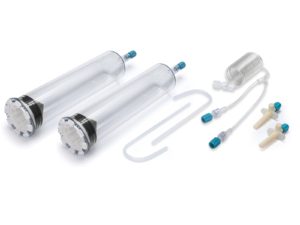
Power injector systems consist of three primary components: the mechanical injection head, disposable contrast syringes, and patient connection tubing. The injection head houses pressure-generating mechanisms, electronic controls, and safety monitoring systems that regulate each injection cycle. Disposable syringes attach to the injection head and hold contrast media volumes ranging from 115-200mL depending on system configuration.
Patient connection tubing includes pressure-rated lines with luer-lock connectors, one-way check valves, and air detection chambers. Contrast power injector syringes and tubing must meet strict manufacturing standards to prevent component failure during high-pressure injection sequences. Clear tubing construction allows technologists to identify air bubbles before initiating injection protocols.
How Do Syringe and Tubing Materials Affect Performance?
Syringe construction materials must provide chemical compatibility with iodinated and gadolinium-based contrast agents while maintaining structural integrity under pressure. Medical-grade polypropylene and polycarbonate plastics offer the necessary strength-to-weight ratios for single-use disposable syringes. Glass syringes provide superior chemical inertness but require careful handling to prevent breakage.
High-quality tubing utilizes flexible, braided polyurethane or dual-layer nylon and urethane construction to prevent kinking during patient positioning. Standard tubing rated for 300 PSI handles routine CT injection protocols, while specialized high-pressure lines withstand up to 1200 PSI for cardiac catheterization applications. Material durability affects patient safety and supply reordering frequency.
How Do Different Injector Systems Compare?
Three primary system architectures dominate the contrast injection market: single-head, dual-head, and syringeless configurations. Each design offers distinct advantages for specific clinical applications, patient volumes, and budget constraints. Understanding these differences helps facilities match equipment capabilities to operational requirements.
System selection depends on annual examination volume, protocol complexity, staff training capacity, and available capital budget. Contrast media injection systems vary significantly in their operational characteristics and total cost of ownership. Facilities must evaluate both immediate needs and projected growth when making purchase decisions.
What are the Features of Single-Head Injector Systems?
Single-head injector systems use one syringe that holds between 115-200mL of contrast agent for each patient examination. These systems deliver contrast sequentially with saline flushes performed separately, either manually or through automated sequential delivery. Flow rate capabilities range from 0.5-10 mL/sec for CT applications and 0.5-3 mL/sec for MRI protocols.
Single-head systems offer lower capital costs and simpler operation, making them suitable for routine single-phase CT studies and most MRI exams. Technologists must change the contrast syringe between every patient, adding manual preparation steps. These configurations work well for lower-volume scanners and facilities with straightforward imaging protocols.
How Do Dual-Head Injector Systems Enhance Injection Protocols?
Dual-head configurations mount two syringes side-by-side: one for contrast and one for saline that remain loaded simultaneously throughout the workday. Independent control enables simultaneous or precisely programmed sequential injection patterns with overlapping delivery phases. This architecture supports bolus shaping techniques where saline begins flowing while contrast injection continues.
Dual-head systems reduce contrast usage by 10-18% through optimized saline flush timing and fully automated multiphasic protocols. These capabilities support advanced CT angiography, cardiac imaging, perfusion studies, and oncology protocols requiring precise timing. Higher upfront capital investment is offset by shorter room time per patient and reduced consumable costs in high-volume facilities.
What Advantages Do Syringeless Power Injectors Offer?
Syringeless power injectors eliminate traditional disposable syringes by utilizing bulk contrast containers and specialized pump tubing. The system automatically draws contrast from the bulk container through dedicated tubing that connects to single-use patient lines. This design minimizes contrast media residues that remain in conventional syringes after each examination.
Syringeless systems optimize patient turnover by reducing manual preparation steps and automating contrast loading between examinations. Advanced IT integration enables automated data recording and protocol selection linked to hospital information systems. Premium pricing for both equipment and proprietary consumables limits adoption primarily to high-volume facilities with complex procedural requirements.
What are the Critical Safety and Regulatory Standards?
Patient safety considerations and regulatory compliance form the foundation of any contrast injector purchase decision. Equipment failures or protocol errors can result in serious adverse events, including contrast extravasation, vascular injury, and air embolism. Facilities must verify that all equipment and consumables meet current FDA standards and follow ACR clinical guidelines.
Regulatory compliance extends beyond initial equipment purchase to include ongoing maintenance, quality control testing, and staff competency verification. Documentation tracks equipment performance, adverse events, and corrective actions, supporting quality improvement initiatives and external regulatory inspections.
Which FDA and ACR Guidelines Govern Contrast Injector Use?
FDA 510(k) clearance is required for contrast injectors marketed in the United States to demonstrate safety and efficacy for injecting contrast media into the vascular system. This premarket notification process requires manufacturers to prove substantial equivalence to legally marketed predicate devices. Equipment must comply with the ACR Manual on Contrast Media guidelines that define evidence-based standards for injection techniques, patient screening, and adverse event management.
These regulatory frameworks establish baseline performance requirements for pressure monitoring, air detection, and emergency shutoff capabilities. Facilities purchasing used or refurbished equipment must verify that previous FDA clearances remain valid under current regulations. Vendor documentation should include the complete regulatory history and any outstanding safety communications or recalls.
How are Extravasation and Air Embolism Risks Managed?
Two primary risks with power injectors include contrast extravasation, where contrast leaks into surrounding tissue, and air embolism from entrapped air entering the bloodstream. Modern injection systems incorporate multiple safety features, including pressure limit controls, automatic injection termination, and visual/audible alarms. Air detection sensors monitor tubing for bubbles before and during injection sequences.
Standard operating procedures must address proper IV access verification, patient monitoring during injection, and immediate response protocols for suspected extravasation events. Contrast injector training programs should include recognition of early warning signs and appropriate intervention techniques. Documentation of all safety events supports continuous quality improvement and risk management efforts.
What Safety Features Should Buyers Verify in Equipment?
Essential safety mechanisms include adjustable pressure limits that prevent excessive injection force, real-time pressure monitoring displays, and automatic shutoff when pressure exceeds safe thresholds. Visual confirmation systems with clear tubing and illumination enable technologists to identify air bubbles before initiating injection protocols. Electronic interlocks should prevent injection initiation until all safety checks are completed.
Additional features include dose tracking systems that record contrast volumes for each patient, emergency stop buttons accessible from multiple locations, and backup power supplies for controlled system shutdown during electrical failures. Quality control testing procedures should verify these safety systems remain functional throughout the equipment lifecycle. Vendor maintenance agreements must specify response times and backup equipment availability during repairs.
How Do Consumer Preferences Influence Product Choices?
Healthcare facilities prioritize different features based on their patient populations, procedural mix, and operational constraints. Hospitals represent 61.5% of market revenue share due to higher examination volumes and more complex imaging protocols. Understanding how different end-user segments evaluate equipment helps vendors align product offerings with actual buyer needs.
Purchase decisions reflect a hierarchy of priorities where safety and clinical performance outweigh cost considerations for most facilities. However, total cost of ownership calculations significantly influence choices between system configurations and consumable supply strategies. Facilities must balance immediate capital budget constraints against long-term operational efficiency gains.
Which End-User Segments Drive Market Demand?
Hospitals represent the largest consumer segment with 61.5% revenue share in 2023, driven by increasing diagnostic imaging procedure volumes and expanding cardiovascular service lines. These facilities typically operate multiple scanners with diverse procedural requirements that justify investment in advanced dual-head or syringeless configurations. Hospital purchasing committees evaluate equipment based on system-wide standardization opportunities and vendor consolidation potential.
Diagnostic imaging centers constitute the second-largest segment, focusing on high patient throughput and operational efficiency to maintain competitive pricing. Ambulatory surgery centers represent a growing market segment as more complex procedures migrate from hospital settings. Each end-user category prioritizes different equipment features based on workflow patterns and reimbursement structures.
What Clinical Applications Require Specific Injector Features?
Interventional cardiology dominated application segments with 35.3% revenue share in 2023 due to the high prevalence of cardiovascular disease requiring diagnostic and therapeutic procedures. These applications demand precise flow rate control, programmable injection sequences, and high-pressure capabilities for selective vessel catheterization. Cardiac imaging protocols benefit from dual-head systems that enable optimized bolus timing for coronary artery visualization.
Dual-head systems particularly support advanced CT angiography, perfusion imaging, and oncology protocols requiring multiphasic contrast enhancement. General radiology applications, including routine CT abdomen/pelvis examinations, typically use simpler single-phase protocols suitable for single-head configurations. Essential consumables for contrast injection vary based on these clinical application requirements.
How are Priority Criteria Ranked by Healthcare Facilities?
Safety and regulatory compliance rank highest among purchasing criteria with importance scores of 95 out of 100. Facilities cannot compromise on FDA clearance, ACR guideline adherence, or extravasation prevention capabilities, regardless of budget constraints. Clinical image quality follows closely at 90 points, reflecting the fundamental purpose of achieving diagnostic-quality examinations.
Total cost of ownership scores 85 points as facilities evaluate capital equipment costs, ongoing consumable expenses, and maintenance contract pricing over typical 5-7 year lifecycles. Workflow efficiency, system compatibility, vendor support, consumable availability, and staff training requirements complete the priority hierarchy with progressively lower scores. This ranking helps facilities make trade-off decisions when comparing systems with different feature sets.
What Should Be Considered Regarding Consumables and Pricing?
The consumables segment held 60.3% market share in 2023, reflecting ongoing operational costs that exceed initial equipment investments over time. The contrast media consumables market was estimated at USD 5.3 billion in 2023 and is projected to reach USD 8.7 billion by 2032. These figures demonstrate that consumable selection significantly impacts long-term budget performance.
Facilities must evaluate both per-unit consumable costs and total annual consumption volumes when comparing system configurations. Proprietary consumables from equipment manufacturers often carry premium pricing compared to third-party alternatives, but compatibility issues can arise when mixing components. Contrast media pricing trends affect budgeting decisions across all facility types.
How Do Prefilled Syringes Compare to Bulk Contrast Media?
Prefilled syringes are sterile, single-use glass or plastic syringes manufactured to ISO 11040-4 standards with contrast media pre-loaded by the manufacturer. These products cost $15-$30 per syringe, representing a higher per-unit cost compared to bulk contrast media drawn into empty syringes. Prefilled options streamline CT procedures by eliminating manual filling steps and reducing preparation time between patients.
These syringes reduce human error risks, improve procedural safety, and simplify supply ordering through standardized volume options. The convenience factor particularly benefits high-volume facilities where technologist time savings offset higher consumable costs. However, facilities performing lower examination volumes may find bulk contrast media more economical despite increased manual preparation requirements.
What are the Key Attributes of High-Pressure Contrast Tubing?
High-quality tubing is constructed from flexible, braided polyurethane or dual-layer nylon and urethane that prevents kinking during patient positioning. Standard tubing is rated for 300 PSI (2.07 MPa) to handle routine CT injection protocols safely. High-pressure lines can withstand up to 1200 PSI (8.3 MPa) for interventional cardiology and specialized applications requiring selective catheter injections.
Budget tubing costs $2-$8 per unit, with pricing varying based on length, pressure rating, and connector configurations. Clear tubing construction is essential for easy debubbling and proper positioning verification before injection sequences begin. Common pitfalls in consumable purchasing include selecting inadequate pressure ratings or incompatible connector types that compromise safety.
How Does Cost of Ownership Affect Consumable Selection?
Total cost calculations must include all consumable items: syringes, tubing, saline bags, and waste disposal fees multiplied by annual procedure volumes. Single-head systems require new contrast syringes for each patient, while dual-head configurations allow contrast syringes to serve multiple patients before replacement. This difference significantly impacts annual consumable budgets in high-volume facilities.
Facilities should model consumption patterns based on their specific case mix, average contrast volumes per examination, and typical syringe capacities. Vendor contracts may offer volume discounts or bundled pricing that reduces effective per-unit costs. Supply chain reliability becomes critical when selecting between multiple vendors versus single-source procurement strategies.
Which Factors Affect Workflow Integration and Training?
Operational efficiency depends on how seamlessly new injection systems integrate with existing imaging equipment and departmental workflows. Compatibility issues between injectors and CT/MRI scanners can delay implementations and reduce staff acceptance. Technical integration extends to hospital information systems, where automated protocol selection and dose recording require interface development.
Staff training requirements vary significantly between system configurations, affecting both initial implementation timelines and ongoing operational costs. Simple single-head systems may require only basic orientation, while complex dual-head configurations demand comprehensive training programs. Facilities must account for learning curves when projecting productivity impacts during equipment transitions.
How Do Injector Systems Integrate with Imaging Equipment?
Modern contrast injectors connect to CT and MRI scanners through standardized communication interfaces that enable automated protocol selection and injection synchronization with scan sequences. Integration allows the scanner to trigger injection start based on optimal timing for contrast enhancement phases. Bidirectional communication sends injection parameters from the scanner console to the injector and returns confirmation of completed delivery.
PACS network integration enables automatic documentation of contrast volumes and injection parameters in patient examination records. Choosing the right injector system requires verifying compatibility with existing scanner models and software versions. Facilities planning scanner upgrades should coordinate injector purchases to ensure continued integration capabilities.
What are the Staff Training Requirements for Injector Use?
Technologists must change contrast syringes between every patient with single-head systems, requiring basic competency in proper syringe installation and air removal techniques. These systems typically need only 2-3 hours of initial training for experienced radiologic technologists. Protocol programming for standard examinations can be completed during initial equipment installation.
Dual-head systems require longer staff training periods, ranging from 4-8 hours to master simultaneous contrast and saline delivery programming. Advanced features, including bolus shaping and multiphasic protocols, need additional specialized training for technologists who will create or modify examination protocols. Ongoing competency verification should occur quarterly to ensure proper technique maintenance.
How Does Workflow Efficiency Impact Operational Decisions?
Dual-head systems have higher upfront capital investment but shorter room time per patient due to automated saline flush delivery and reduced manual preparation steps. Time savings of 2-3 minutes per examination accumulate significantly in facilities performing 20-30 contrast-enhanced studies daily. This efficiency gain enables higher patient throughput without additional staff or extended operating hours.
Single-head systems require manual syringe changes between patients, adding preparation time but simplifying operation for less experienced technologists. Facilities must evaluate whether workflow improvements justify premium pricing for advanced system configurations. Patient scheduling flexibility and staff overtime costs factor into these calculations alongside direct equipment and consumable expenses.
What are the Top Checks Before Purchasing Contrast Injector Supplies?
Equipment and supply purchasing decisions require systematic evaluation of facility-specific requirements against available product offerings. This buyer’s guide recommends focusing on volume alignment, total ownership costs, and vendor support capabilities. Thorough assessment prevents costly mistakes and ensures long-term operational success.
Purchase decisions represent multi-year commitments that affect clinical capabilities, operational budgets, and staff satisfaction. Facilities should involve radiology directors, lead technologists, and procurement specialists in evaluation processes. Cross-functional input helps identify requirements that single departments might overlook.
How to Assess Volume and Case Mix Alignment?
The threshold for dual-head system justification is typically 6,000 exams per scanner annually based on industry cost-benefit analyses. Facilities performing fewer examinations generally cannot achieve sufficient consumable savings to offset higher capital and maintenance costs. Case mix evaluation should identify what percentage of examinations require multiphasic protocols versus simple single-phase acquisitions.
Facilities with high proportions of cardiac, vascular, or oncology imaging benefit most from dual-head capabilities that optimize contrast delivery timing. General diagnostic facilities performing primarily routine abdomen/pelvis examinations may find single-head systems adequate for clinical needs. Growth projections over the equipment’s expected 7-10 year lifespan should inform sizing decisions.
How to Evaluate Total Cost of Ownership Accurately?
Single-head systems have capital costs ranging from $150,000-$300,000 while dual-head systems cost $400,000-$600,000+ depending on features and manufacturer. Syringeless systems represent the premium category at $500,000-$750,000+ with additional costs for proprietary bulk containers and specialized tubing. These figures exclude installation, training, and integration expenses.
Annual operating costs include service contracts (typically 8-12% of capital cost), consumable supplies, and staff time for system operation and maintenance. Facilities should calculate 5-year total ownership, including all expenses, to enable accurate system comparison. Consumable cost differences between configurations can shift total ownership calculations significantly in high-volume environments.
What Vendor Support and Consumable Availability Are Essential?
Vendor support capabilities should include 24-48 hour service response guarantees, backup equipment availability during repairs, and dedicated technical support for protocol optimization. Training programs must address initial implementation needs and ongoing competency development for new staff members. Vendor references from similar facilities provide insight into actual support performance versus contract promises.
Consumable supply chain reliability prevents workflow disruptions from inventory shortages or unexpected price increases. Single-source vendors offering both equipment and supplies simplify procurement but may limit price negotiation leverage. Multi-vendor strategies provide pricing flexibility but increase administrative complexity and potential compatibility issues.
Contrast Power Injector Syringes and Tubing: Comprehensive Purchasing Insights
Healthcare facilities making informed purchase decisions about contrast injection equipment position themselves for long-term operational success and superior patient care. This buyer’s guide has examined system configurations, safety requirements, consumable costs, and workflow considerations that drive equipment selection. Facilities must align technology capabilities with clinical protocols, examination volumes, and budget constraints.
The contrast injection equipment market continues to expand as diagnostic imaging volumes increase and protocols become more sophisticated. Spectrum Medical Imaging Co. supports healthcare facilities with expert guidance on equipment selection, consumable supply management, and technical service throughout the equipment lifecycle. Making the right purchase decision requires balancing immediate budget constraints against long-term operational efficiency and clinical capability requirements.
Ready to Stock the Right Syringes and Tubing for Your Injector System?
Selecting the right contrast power injector consumables is a clinical and operational decision, and Spectrum Medical Imaging Co. has supported imaging facilities across Southern California and beyond for 30+ years. Whether your department runs single-head CT protocols, dual-head angiography workflows, or syringeless systems, Spectrum Medical Imaging Co. carries the syringes, tubing, and accessories you need to keep your injectors running and your patients safe. Contact us to speak with a product specialist today.