Managing MRI contrast cost requires understanding acquisition pricing and operational variables affecting total examination expenses. Healthcare facilities face complex decisions balancing diagnostic quality, patient safety, and budget constraints across gadolinium-based contrast media categories. The global market for these agents reached $1.66 billion in 2025, representing 22.7% of the total contrast media market valued at $7.31 billion.
Key Takeaways
- Gadolinium-based MRI contrast agents represent a $1.66 billion global market with 9.1% annual growth through 2033
- Standard gadolinium agents cost $1.13-$2.75 per mL, while premium hepatobiliary agents reach $14.73 per mL
- Multidose packaging strategies can reduce total contrast expenses by $18.29-$20.70 per examination
- Supply chain diversification and strategic inventory management mitigate shortage risks demonstrated during the 2022 crisis
- Patient priorities emphasize diagnostic performance (44.3% decision weight) over out-of-pocket cost (7.5% decision weight)
Effective cost management extends beyond unit pricing to encompass packaging efficiency, waste reduction, supplier reliability, and clinical appropriateness. Facilities must evaluate gadolinium pricing within broader procurement frameworks, accounting for patient volume, examination types, storage requirements, and supply chain resilience demonstrated during the 2022 iodinated contrast shortage.
What Are Gadolinium-Based Contrast Media and Their Role in MRI?
Gadolinium-based contrast media enhance soft-tissue visualization during magnetic resonance imaging through paramagnetic properties that alter local magnetic fields. These MRI contrast agents enable clinicians to detect tumors, inflammatory processes, vascular abnormalities, and tissue perfusion patterns invisible on non-contrast examinations. Approximately 30-45% of the 40 million annual MRI procedures in the United States utilize gadolinium enhancement.
Clinical value justifies premium pricing compared to routine CT contrast agents. Oncologic imaging, neurologic assessment, cardiac evaluation, and musculoskeletal diagnostics depend on gadolinium’s ability to differentiate normal from pathologic tissue.
How Do Linear and Macrocyclic Gadolinium Agents Differ?
Linear gadolinium agents feature open-chain molecular structures that bind the gadolinium ion through flexible chelation frameworks. Macrocyclic agents employ ring-shaped molecular architectures caging the gadolinium ion within rigid circular structures. Clinical practice has shifted toward macrocyclic formulations due to lower tissue-retention profiles and improved stability.
Molecular structure directly influences safety perceptions and market positioning within gadolinium pricing tiers. Macrocyclic agents typically command higher unit costs but address institutional risk-management priorities regarding long-term retention concerns.
What Clinical Applications Rely on Gadolinium Contrast?
Brain tumor characterization, liver lesion detection, breast cancer screening, and cardiac viability assessment represent high-volume gadolinium applications. Specialized hepatobiliary agents enable functional liver imaging by incorporating gadoxetate compounds that hepatocytes actively uptake and excrete. These premium formulations support diagnostic workflows that non-contrast or standard-agent protocols cannot replicate.
Volume distribution across applications directly impacts budgeting MRI contrast allocations for different service lines. Facilities with high oncology or neurology caseloads require larger gadolinium inventories than general community hospitals.
What Are the Key Advantages and Safety Concerns of Gadolinium Agents?
Superior soft-tissue contrast resolution and multi-planar imaging capabilities position gadolinium as essential for complex diagnostic challenges requiring anatomic detail. These advantages support higher reimbursement rates for contrast-enhanced studies compared to non-contrast examinations. Patient preference studies show cancer detection sensitivity weighs 44.3% in decision-making, far exceeding cost considerations at 7.5%.
Safety management focuses on gadolinium retention, allergic-type reactions, and renal function screening in high-risk populations. Intracranial retention concerns contribute 11.6% of patient decision weight, while severe allergic reaction risk accounts for 17.0%. Acute allergic-like reactions and nephrogenic systemic fibrosis risk in renally impaired patients require clinical protocols balancing diagnostic benefit against individual vulnerability.
How Does the Gadolinium Contrast Market Compare to Other Contrast Media?
Gadolinium agents occupy the second-largest market segment after iodinated CT contrast, representing distinct procurement and budgeting dynamics. The $1.66 billion gadolinium market demonstrates faster growth at 9.1% CAGR through 2033 versus 7.8% for iodinated agents. This expansion reflects increasing MRI utilization, aging populations, and chronic disease prevalence, driving advanced imaging demand.
Market positioning influences vendor negotiations and group purchasing organization contract structures. Understanding relative market size helps procurement teams benchmark spending patterns against industry norms.
What Is the Global Market Share and Growth Trend for Gadolinium Agents?
Gadolinium-based agents captured 22.7% of the global contrast media market in 2025, valued at $1.66 billion within the total $7.31 billion market. The overall market projects growth to $13.86 billion by 2033 at 8.39% CAGR. Gadolinium’s 9.1% growth rate exceeds the market average, indicating stronger expansion than established iodinated products.
Regional variation shows North America commanding 38.9% global market share at $2.84 billion, followed by Asia Pacific at 27.4% with a faster 8.9% growth. These geographic patterns inform supplier negotiations and inventory planning for facilities within different health system contexts.
How Do Gadolinium Prices Compare to Iodinated and Microbubble Contrasts?
Standard gadolinium agents like Dotarem (gadoterate meglumine) cost approximately $1.13 per mL equivalent, while Gadavist (gadobutrol) reaches $2.75 per mL. Premium hepatobiliary agent Eovist (gadoxetate disodium) commands $14.73 per mL for specialized liver imaging. These gadolinium pricing levels substantially exceed low-osmolar iodinated CT contrast at $0.152 per mL under Medicare benchmark Q9967 coding.
Microbubble ultrasound agents demonstrate even higher unit costs at $40.653 per mL for perflutren lipid microspheres. The price hierarchy reflects clinical specificity, manufacturing complexity, and market competition dynamics.
What Are Typical Pricing Benchmarks for Common Gadolinium Products?
A standard 15 mL gadoterate dose for routine MRI costs approximately $16.95 at benchmark pricing, representing mid-range MRI contrast cost for typical examinations. Premium liver MRI using 10 mL gadoxetate reaches $147.30 per examination, targeting specialized hepatobiliary protocols. These benchmarks derive from the October 2025 CMS Average Sales Price files, providing Medicare payment limits.
Actual contracted prices vary through group purchasing agreements and volume commitments negotiated between facilities and distributors. Price-match guarantees and prime dealer relationships can reduce effective costs below published benchmarks for high-volume purchasers.
Which Factors Influence Gadolinium Contrast Pricing and Total Cost?
Multiple variables beyond unit acquisition price determine true MRI contrast cost per completed examination. Package format, dose matching, waste generation, supplier reliability, and clinical prioritization protocols collectively shape total expenditure. Evidence from eight-hospital cost-minimization studies demonstrates that operational choices can alter per-exam costs by $18.29-$20.70 independent of base product pricing.
Procurement teams must evaluate these factors holistically rather than selecting products based solely on the lowest bid pricing. Facilities implementing comprehensive contrast management protocols achieve better cost outcomes than those focused exclusively on unit price negotiations.
How Do Package Size and Waste Affect Effective Cost per Exam?
Multidose packaging reduces waste when matched to patient volume patterns, saving $18.29-20.70 per enhanced CT examination in documented case studies. Larger 500 mL formats versus 100 mL single-dose vials save approximately $1.58 per patient through improved dose efficiency. These savings require implementing 8-hour in-use limits for opened bulk packages under compliant sterile handling protocols.
Package selection must align with daily procedure volumes to prevent expiry losses offsetting purchase-price advantages. Low-volume sites may achieve better economics with single-dose formats despite higher nominal unit costs.
What Role Do Supplier Diversification and Supply Chain Resilience Play?
Single-source supplier exposure creates catastrophic interruption risk during production disruptions or quality events. The 2022 iodinated contrast shortage demonstrated that just-in-time inventory models collapse when primary suppliers experience extended outages. Supplier diversification functions as operational insurance despite potentially higher administrative complexity and reduced volume-based discounting.
Concentration risk from limited supplier bases requires formal risk assessment within procurement strategies balancing cost optimization against continuity assurance. Facilities managing emerging market dynamics recognize supplier stability as a cost factor equal to unit pricing.
How Do Patient and Provider Priorities Impact Budgeting Decisions?
Patient decision weight studies show cancer detection sensitivity dominates at 44.3%, while mild allergic reaction concerns contribute 19.5%. Out-of-pocket cost represents only 7.5% of decision importance in high-stakes imaging contexts. These priorities indicate clinical performance and safety perceptions drive patient satisfaction independent of facility cost considerations.
Provider priorities balance these patient expectations against departmental budget constraints and operational efficiency requirements. Understanding this dual priority structure helps justify investments in premium agents for appropriate clinical scenarios while standardizing cost-effective options for routine applications.
What Are Best Practices for Procuring and Managing Gadolinium Contrast?
Effective procurement combines strategic vendor relationships, inventory optimization, clinical governance, and shortage preparedness into integrated management frameworks. Best-practice organizations formalize shortage protocols before disruptions occur rather than improvising responses during supply crises. These protocols should convert ASHP guidance into standing operating procedures addressing exam prioritization, modality substitution, and contrast-avoidance criteria.
Facilities implementing comprehensive cost-reduction strategies achieve sustainable savings without compromising diagnostic quality or patient safety.
How Can Bulk Purchasing and Multidose Packaging Reduce Expenses?
Bulk purchasing leverages volume commitments to negotiate lower unit pricing and favorable payment terms. Multidose packaging reduces per-exam costs when facilities implement compliant sterile controls for repackaging and maintain proper in-use time limits. These strategies require pharmacy capability and governance infrastructure to maintain safety standards while capturing economic benefits.
Eight-hour in-use limits and extended beyond-use dating under USP compliance enable safe inventory optimization. Successful programs balance cost reduction against quality assurance requirements and staff training investments.
What Strategies Mitigate Risk During Contrast Media Shortages?
Prioritizing high-acuity examinations during shortages preserves limited supply for cases where diagnostic impact justifies consumption. Shifting appropriate studies to MRI or ultrasound when iodinated CT contrast unavailable maintains patient access while managing scarce resources. Performing selected scans without contrast when clinically acceptable extends available inventory for cases requiring enhancement.
Delaying nonurgent exams and using alternative products when appropriate provide additional conservation levers during extended disruptions. Facilities incorporating these approaches into formal governance structures respond more effectively than those developing crisis plans during active shortages.
How Should Departments Balance Cost, Convenience, and Safety?
Departments must match product selection and packaging choices to service-line objectives rather than applying uniform standards across all applications. Emergency departments prioritizing rapid throughput may justify premium prefilled syringe formats despite higher costs, while routine outpatient centers optimize with bulk bottles. Safety considerations including patient risk profiles and staff training requirements inform these tradeoffs.
Cost analysis mri programs should segment decisions by clinical context rather than enforcing single-product standardization. Evaluating vendor capabilities ensures suppliers support varied departmental needs across the facility portfolio.
How Do Packaging Types and Workflow Choices Affect Gadolinium Costs?
Packaging selection directly impacts labor costs, waste generation, and workflow efficiency beyond base product pricing. Provider surveys show glass bottles dominate 69.6% of work areas, primarily due to cost-effectiveness cited by 35.0% of facilities. Prefilled syringes occupy 18.1% of areas where convenience drives 27.2% of adoption decisions.
Understanding these usage patterns helps procurement teams align packaging investments with operational priorities. Facilities managing inventory strategies recognize that packaging economics vary by department volume and workflow requirements.
What Are the Differences Between Glass Bottles, Polymer Bottles, and Prefilled Syringes?
Glass bottles provide the lowest-cost option and dominate 69.6% of imaging department work areas. Polymer bottles represent 10.9% of installations, with 37.3% citing cost-effectiveness and 19.9% prioritizing work safety over glass alternatives. Prefilled syringes account for 18.1% of work areas, justified by convenience in 27.2% of adoption decisions.
Each packaging type addresses different operational priorities balancing acquisition cost, breakage risk, preparation time, and workflow efficiency. Successful facilities match packaging to specific department requirements rather than enforcing facility-wide standardization.
How Do Workflow Efficiencies Influence Gadolinium Contrast Use?
Prefilled syringes reduce preparation time and improve power injector compatibility, creating convenience valued at 27.2% of adoption rationale. Polymer bottles enhance work safety through reduced breakage risk, representing 19.9% of selection reasoning. These workflow benefits justify premium pricing when labor costs and throughput requirements exceed savings from lower-cost packaging options.
High-volume departments processing 50+ examinations daily realize different economics than low-volume specialty centers performing 5-10 weekly studies. Workflow analysis should quantify time savings and error reduction against packaging cost differentials.
When Is Higher Packaging Cost Justified by Operational Benefits?
Premium packaging justification occurs when labor savings, reduced waste, or improved safety outcomes offset higher acquisition costs. Emergency departments requiring rapid patient throughput benefit from prefilled syringe formats despite 15-25% higher unit costs compared to bulk bottles. Facilities with high technologist turnover may prefer standardized prefilled systems, reducing training requirements and preparation errors.
Cost-benefit analysis should incorporate total workflow economics, including labor rates, throughput capacity, and quality metrics. Proper handling protocols ensure packaging investments deliver intended operational improvements.
What Recent Trends Have Shaped Gadolinium Contrast Pricing and Demand?
The 2022 iodinated contrast shortage fundamentally altered procurement strategies by exposing vulnerabilities in concentrated supply chains and just-in-time inventory models. This crisis began in late April 2022 when COVID-19 lockdowns in Shanghai disrupted GE Healthcare’s production of iohexol-based products. Just-in-time systems lacked buffer inventory to absorb the extended outage, forcing hospitals to implement emergency conservation and substitution protocols.
Recovery extended through mid-2022, with order-fill performance remaining poor until late September 2022 production normalization. The experience permanently shifted procurement thinking toward supplier diversification and strategic inventory reserves, even at higher carrying costs.
How Did the 2022 Iodinated Contrast Shortage Impact Gadolinium Use?
The 2022 shortage triggered spillover demand into MRI modalities as hospitals substituted contrast-enhanced CT studies with gadolinium-based examinations when clinically appropriate. Bayer and Guerbet increased gadolinium production capacity in response to a secondary demand surge from CT substitution protocols. This cross-modality impact demonstrated that gadolinium pricing and availability cannot be managed in isolation from broader contrast media supply dynamics.
Facilities maintaining diversified supplier relationships and strategic gadolinium inventory weathered the crisis better than single-source operations. The shortage validated resilience-focused procurement approaches, balancing cost optimization against continuity assurance.
What Are Projected Market Growth Patterns Through 2026?
Gadolinium-based agents project 9.1% CAGR expansion through 2033, outpacing overall market growth at 8.39% annually. The segment value increases from $1.66 billion in 2025 toward $3.28 billion by 2033 under current growth trajectories. North America maintains the largest regional market at $2.84 billion, while Asia Pacific demonstrates the fastest growth at 8.9% CAGR.
These projections support continued investment in MRI infrastructure and gadolinium procurement capacity. Understanding growth patterns helps facilities anticipate future demand and negotiate multi-year supply agreements, capturing favorable pricing.
How Has Patient Preference Influenced Gadolinium Contrast Selection?
Patient preference studies reveal diagnostic performance concerns dominate decision-making at 44.3% weight for cancer detection sensitivity. Safety factors, including mild allergic reactions (19.5%) and severe reactions (17.0%), outweigh cost considerations at 7.5% importance. Intracranial retention concerns contribute 11.6% to preference calculations, influencing institutional adoption of macrocyclic agents over linear alternatives.
These preference patterns support clinical investments in premium macrocyclic formulations despite higher acquisition costs when patient satisfaction and retention matter strategically. Marketing premium safety profiles addresses patient concerns more effectively than cost-focused messaging in high-acuity settings.
What Demographic and Clinical Factors Drive Gadolinium Contrast Demand?
Aging populations generate disproportionate imaging demand, with individuals aged 60+ consuming higher per-capita resources than younger cohorts. Rural elderly populations demonstrate $229.7 PPP imaging expenditure compared to $207.6 PPP for urban elderly residents. Peak expenditure reaches $466.5 PPP for ages 78-86, reflecting chronic disease burden and cancer screening intensity.
Site-of-care variation shows outpatient hospitals generating the highest utilization at 10,728.1 exams per 100,000 Medicare beneficiaries. These demographic and setting patterns inform demand forecasting for facilities planning, gadolinium inventory levels, and supplier capacity requirements.
Which Patient Groups Most Frequently Require Gadolinium MRI?
Age 60+ populations drive peak demand through elevated cancer, cardiovascular, and neurologic disease prevalence, requiring contrast-enhanced MRI evaluation. Rural elderly demonstrate $229.7 PPP imaging expenditure versus $207.6 PPP urban levels. Peak elderly expenditure reaches $466.5 PPP around ages 78-86 when oncologic screening and chronic disease monitoring intensify.
These age-related patterns will amplify as Baby Boomer cohorts reach peak utilization years through 2030-2035. Facilities serving aging populations should anticipate sustained gadolinium demand growth exceeding general market expansion rates.
How Does Site-of-Care Variation Affect Gadolinium Procurement?
Outpatient hospital settings generate the highest examination volumes at 10,728.1 per 100,000 Medicare beneficiaries, representing primary gadolinium consumption centers. Emergency departments perform 8,739.5 exams per 100,000 beneficiaries requiring protected contrast inventory for acute-care continuity. Inpatient hospitals contribute 5,929.4 exams per 100,000, while office settings account for 3,815.7 per 100,000 beneficiaries.
Procurement strategies must address these utilization patterns through differentiated inventory positioning and supplier agreements matching site-specific volume requirements. Facilities managing multi-site operations require suppliers supporting distributed delivery and varied packaging formats.
What Imaging Modalities Compete or Complement Gadolinium Use?
Abdomen/pelvis CT represents the highest-volume contrast examination at 13,951.5 per 100,000 Medicare beneficiaries, creating baseline iodinated contrast demand. Chest CT follows at 9,684.5 per 100,000 beneficiaries as a secondary major category. These CT volumes establish the scale of potential substitution to MRI during iodinated shortages when protocols permit modality switching.
Complementary relationships exist where CT and MRI address different diagnostic questions requiring sequential imaging with both modalities. Understanding these competitive and complementary dynamics informs budgeting MRI contrast allocations across modality platforms within integrated imaging networks.
MRI Contrast Cost Insights: Synthesizing Factors Affecting Gadolinium Pricing and Procurement
Effective gadolinium contrast management requires integrating clinical requirements, operational efficiency, supplier relationships, and financial controls into comprehensive procurement frameworks. Single-variable optimization focused exclusively on unit price generates suboptimal outcomes when waste, workflow inefficiency, or supply disruption costs exceed acquisition savings. Successful facilities segment product selection by clinical acuity, match packaging to volume patterns, diversify supplier relationships, and formalize shortage governance before crises occur.
Patient priorities emphasize diagnostic performance and safety over cost in high-stakes settings, while provider operations balance these clinical imperatives against budget constraints and throughput requirements. Facilities implementing evidence-based supplier selection achieve better total-cost outcomes than those relying on periodic competitive bidding without relationship management.
Market fundamentals support continued gadolinium demand growth at 9.1% CAGR through 2033, driven by aging populations, chronic disease prevalence, and MRI technology advancement. Procurement strategies should anticipate this expansion through multi-year agreements, capacity planning with suppliers, and inventory optimization matching demographic trends. The 2022 shortage experience validates resilience investments, including supplier diversification, strategic buffer stock, and cross-modality substitution protocols as essential components of modern contrast management.
Healthcare facilities benefit from partnering with experienced suppliers offering comprehensive product portfolios, rapid delivery capabilities, and clinical support services. Organizations with 42 years of industry operation, 24-48 hour nationwide shipping, and prime dealer relationships with major manufacturers provide operational stability that pure price-focused vendors cannot match. Spectrum Medical Imaging Co. established relationships with Guerbet, Bayer, and other leading contrast manufacturers to enable facilities to access competitive pricing while maintaining supply chain security and technical support. Contrast media procurement represents a strategic decision requiring expertise beyond commodity purchasing approaches.
Get Competitive Gadolinium Pricing With a Supplier You Can Rely On
Managing MRI contrast costs takes more than finding the lowest unit price — it takes a supplier with the inventory depth, delivery reliability, and manufacturer relationships to support your facility when it matters most. Spectrum Medical Imaging Co. has served imaging departments for 30+ years as a prime dealer for leading gadolinium manufacturers, including Guerbet, Bayer, Bracco, and Fresenius-Kabi.
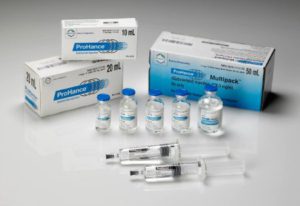
Whether your facility uses Dotarem, Gadavist, Eovist, ProHance, or MultiHance, we keep your preferred agents stocked and ready to ship within 24–48 hours nationwide. We’ll also work to beat your current pricing — no long negotiations required. Contact our imaging supply specialists to discuss customized solutions matching your facility’s volume, clinical priorities, and budget requirements through comprehensive product portfolios and proven service reliability.