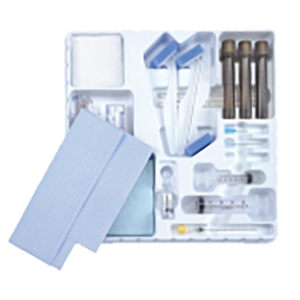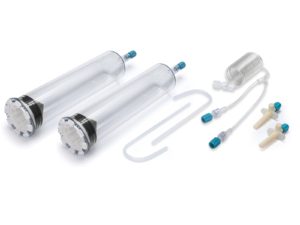
CT injector systems and MRI injector systems serve the same fundamental purpose but operate under completely different technical constraints. CT injectors must deliver contrast rapidly at high pressure to capture fast-moving blood flow during X-ray imaging. MRI injectors prioritize magnetic field safety and steady delivery rates for longer scan durations.
Understanding these system comparison differences helps radiology departments select equipment matching their clinical protocols and patient volume. The contrast delivery differences between these modalities directly impact image quality, patient safety, and operational efficiency. Facilities performing both CT and MRI scans often maintain separate injector systems due to incompatible technical requirements.
Key Takeaways
- CT injectors deliver contrast at 0.5-10 mL/sec and handle pressures up to 600 psi for rapid vascular imaging
- MRI injectors require non-magnetic construction for safe operation in 1.5T, 3T, and 7T magnetic environments
- Dual-head systems reduce contrast usage by 10-18% compared to single-syringe configurations
- Syringeless injectors eliminate nearly 100% of contrast waste and save approximately 40.5 seconds per exam
- High-volume facilities performing over 6,000 annual exams achieve better ROI with dual-head or syringeless systems
What Are CT and MRI Injector Systems?
CT and MRI injector systems automate contrast media delivery during diagnostic imaging procedures. These devices precisely control flow rates, injection timing, and volume to enhance visualization of vascular structures and tissue. Both system types connect to scanner protocols through electronic interfaces that synchronize contrast delivery with image acquisition.
The global contrast media injectors market reached approximately USD 1.6 billion in 2024. Market projections estimate growth to USD 2.4 to 2.9 billion by 2032-2034 with a CAGR between 7.5% and 8.1%.
Definition and Purpose of CT Injectors
CT injectors are engineered for speed, high volume, and high-pressure delivery alongside X-ray technology. These systems operate at flow rates between 0.5 and 10 mL/sec with pressure capabilities reaching 300-600 psi. Rapid delivery enables visualization of blood flow during arterial, venous, and delayed imaging phases.
CT injectors excel in trauma imaging, cardiac angiography, and pulmonary embolism protocols where timing is critical. The system features robust mechanical assemblies and precise motor drives to maintain consistent pressure throughout injection. Most models accommodate syringe capacities between 115 and 200 mL for single-patient use.
Definition and Purpose of MRI Injectors
MRI injectors prioritize safety, steady flow, and absolute magnetic field compatibility. These systems operate remotely from the scanner room due to strong magnetic fields that attract ferromagnetic materials. Flow rates range from 0.5 to 3 mL/sec, matching the slower pace of MRI acquisition sequences.
Every component must use non-magnetic materials to function safely in 1.5T, 3T, and 7T environments. This includes specialized plastics, shielded electronics, and non-ferrous mounting hardware. MRI injectors typically cost more than CT models due to these specialized material requirements.
Common Components in Both Systems
Both CT and MRI injectors share fundamental components, including programmable control interfaces and pressure monitoring systems. Electronic protocol libraries store customized injection parameters for different scan types. Syringe mounting assemblies secure contrast and saline containers regardless of system configuration.
Safety features include air detection sensors, pressure limit alarms, and extravasation detection capabilities. Tubing sets connect the injector head to patient access sites through sterile, single-use components. Most modern systems integrate directly with scanner consoles to automate protocol selection and injection timing.
How Do CT and MRI Injector Systems Differ Technically?
CT injector systems and MRI injector systems differ fundamentally in flow rates, pressure capabilities, and material construction. Understanding these technical distinctions ensures proper equipment selection for specific imaging modalities. The contrast delivery differences between these systems directly affect image quality and patient safety protocols.
CT systems prioritize speed and high-pressure delivery for rapid vascular imaging during short scan times. MRI systems emphasize magnetic field compatibility and controlled delivery during extended acquisition sequences.
Flow Rate and Pressure Capabilities
CT injectors operate at 0.5-10 mL/sec versus MRI injectors at 0.5-3 mL/sec. Higher flow rates enable CT protocols to capture arterial phase enhancement during rapid bolus timing. CT injectors handle 300-600 psi, versus MRI injectors with lower pressure requirements suited to gadolinium-based agents.
The pressure differential exists because CT contrast media are typically iodinated compounds with higher viscosity than gadolinium chelates. CT angiography protocols require rapid injection through small-gauge catheters to maintain bolus geometry. MRI protocols allow gentler delivery because longer scan times provide adequate tissue enhancement with lower injection rates.
Material and Magnetic Field Compatibility
MRI systems must use non-magnetic materials for 1.5T, 3T, and 7T environments. Every component undergoes rigorous testing to ensure zero ferromagnetic attraction or electromagnetic interference. Specialized plastics, carbon fiber, and shielded wiring replace standard aluminum and steel components found in CT injectors.
MRI injectors have higher capital costs due to specialized non-magnetic materials and remote operation requirements. The systems operate from outside the scanner room with extended tubing sets reaching patient access points. CT injectors use standard medical-grade materials and mount directly adjacent to the scanner gantry.
Delivery Protocols and Contrast Media Types
CT protocols typically use iodinated contrast media delivered in concentrated boluses for arterial, venous, and delayed phases. MRI protocols employ gadolinium-based agents requiring lower total volumes and slower infusion rates. Timing differences reflect fundamental variations in how each modality generates diagnostic images.
Contrast media selection depends on the patient’s renal function, allergy history, and specific clinical indications. CT injectors often incorporate dual-head configurations that deliver contrast followed immediately by a saline flush for optimal enhancement. MRI protocols rarely require saline chasers due to slower injection rates and different pharmacokinetics.
What Are the Market Trends and Consumer Preferences for These Systems?
The global contrast media injectors market demonstrates sustained growth driven by aging populations and chronic disease prevalence. Market projections indicate expansion to USD 2.4 to 2.9 billion by 2032-2034 from the 2024 baseline of USD 1.6 billion. The U.S. market alone accounted for USD 604.94 million in 2024, with accelerated regional adoption.
U.S. market CAGR of 10.08% from 2025 to 2030 outpaces global growth rates. This reflects higher healthcare spending, advanced imaging adoption, and favorable reimbursement environments.
Market Share by System Type and Configuration
CT injector systems hold 58.7% market share, reflecting a higher volume of contrast-enhanced CT procedures performed globally. MRI injectors account for 28.5% of the market, with dual-modality capable systems comprising 12.8%. CT system dominance stems from its critical role in emergency trauma, cardiac imaging, and routine diagnostic protocols.
Single-head injectors hold more than 43% market share as the most common configuration in smaller facilities. Dual-head systems hold approximately 28%, with steady growth in high-volume centers. Syringeless systems comprise 22% of the market with a 4.8% annual growth rate through 2036.
Consumer Priority Factors in System Selection
Reliability and performance are weighted at 28% versus cost and budget at 22% in decision factors. Clinical staff prioritizes image quality and consistent flow rates during procedures. Hospital administration focuses on cost containment, total cost of ownership, and capital expenditure justification.
Quality of care impact accounts for 27.5% versus financial viability at 22.5% in procurement decisions. Vendor support networks and service response time commitments represent 12% of decision weighting. Warranty terms, preventive maintenance requirements, and parts availability contribute 5% to equipment selection criteria.
Geographic and Demographic Adoption Patterns
Urban hospitals have 35% adoption share versus rural centers with 6%. Large urban hospitals invest in premium systems with advanced automation and waste reduction capabilities. Outpatient imaging centers hold 22% adoption share with rapid growth driven by volume migration from hospital settings.
Approximately 40% of radiology volume now occurs in outpatient imaging centers rather than acute-care hospitals. Mid-size hospitals maintain 25% adoption share, balancing budget constraints with advanced imaging capabilities. Suburban facilities comprise 12%, with steady expansion of service offerings to capture growing patient populations.
How Do Single-Syringe, Dual-Syringe, and Syringeless Systems Compare?
Single-syringe, dual-syringe, and syringeless configurations represent distinct approaches to contrast delivery and workflow efficiency. Each configuration offers specific advantages for different facility types, patient volumes, and clinical protocols. Power injector medical devices continue evolving toward automation, waste reduction, and improved technologist workflow.
System selection depends on annual exam volume, facility budget, and specific imaging protocols. High-volume centers typically achieve better ROI with advanced configurations despite higher initial capital costs.
Features and Advantages of Single-Syringe Systems
Single-head systems mount one 115-200 mL syringe for contrast delivery. These configurations offer the lowest initial capital cost and simplest operation for routine single-phase studies. The systems require manual saline flushing after contrast injection and syringe changes between every patient.
Single-syringe injectors remain dominant in smaller facilities performing fewer than 3,000 contrast-enhanced exams annually. Maintenance requirements are minimal with fewer moving parts and simplified mechanical assemblies. However, the configuration lacks advanced bolus shaping capabilities required for complex cardiac and neurological protocols.
Benefits and Challenges of Dual-Syringe Systems
Dual-head systems mount two syringes side-by-side, with one containing contrast and one containing saline. This configuration enables automated multiphasic protocols with overlapping contrast-saline delivery for optimal vascular enhancement. Dual-head systems reduce contrast usage by 10-18% through efficient saline flushing and bolus shaping.
The systems shorten room time per patient by eliminating manual saline injection steps. However, dual-head configurations require higher upfront investment and more complex maintenance schedules. Staff training periods extend beyond single-head systems due to increased protocol programming and troubleshooting requirements.
Innovations in Syringeless (Multi-Use) Injector Systems
Syringeless systems use rollers to squeeze precise amounts of contrast from large, multi-patient containers. Multi-use containers hold approximately 500 mL for multiple patients without individual syringe waste. These systems eliminate nearly 100% of contrast waste compared to traditional syringe-based configurations.
Syringeless systems save approximately 40.5 seconds of preparation time per exam. They can increase throughput by 2.6 patients per day per scanner in high-volume departments. Over 16 weeks, syringeless systems eliminate 31.3 liters of wasted contrast and 467.7 kg of plastic waste.
What Influences Procurement and Decision-Making for Injector Systems?
Healthcare facilities evaluate multiple factors when selecting contrast injector systems for their imaging departments. Equipment compatibility with existing scanners and workflow integration requirements influences procurement decisions. Decision-making involves radiology directors, hospital administrators, chief financial officers, and lead technologists with competing priorities.
Each stakeholder group weighs reliability, safety, performance, cost, and vendor support differently. Successful procurement balances clinical requirements with financial constraints and long-term operational sustainability.
Reliability, Safety, and Performance Considerations
Diagnostic accuracy and consistent image quality depend on precise contrast delivery throughout every injection cycle. Pressure monitoring systems and extravasation detection capabilities protect patient safety during high-pressure CT injections. Magnetic field compatibility testing ensures MRI injectors operate without electromagnetic interference or device malfunction.
Clinical staff prioritizes systems that maintain consistent performance across diverse patient populations and scan protocols. Remote diagnostics and predictive maintenance capabilities reduce unexpected equipment failures that create patient backlogs. Safety certifications and regulatory compliance documentation satisfy quality assurance and accreditation requirements.
Cost, ROI, and Budget Implications
Volume threshold of 6,000 contrast-enhanced exams annually justifies upgrading to dual-head or syringeless configurations. Syringeless systems offer estimated savings of over $8 per patient through contrast and plastic waste elimination. Initial capital premium typically achieves payback within 18-24 months in high-volume departments.
Budget considerations include acquisition cost, consumable expenses, service contracts, and staff training investments. Total cost of ownership calculations incorporate contrast waste reduction, throughput improvements, and technologist efficiency gains. Facilities must evaluate whether per-exam savings justify higher capital expenditures based on projected annual volumes.
Vendor Support and Maintenance Factors
Service network coverage and response time commitments directly affect operational uptime and patient scheduling reliability. Parts availability and inventory management capabilities minimize equipment downtime during repair cycles. Comprehensive training programs ensure staff proficiency on advanced features and protocol programming.
Preventive maintenance schedules and service contract terms influence long-term operational costs beyond initial acquisition. Vendor relationships spanning installation, training, ongoing support, and eventual system upgrades provide continuity. Technical expertise and manufacturer partnerships ensure proper troubleshooting of complex integration issues.
How Are Injector Systems Used Across Different Healthcare Facilities?
Injector system adoption varies significantly across facility types based on patient volume, service offerings, and capital budgets. Large urban hospitals invest in premium systems with advanced automation and waste reduction capabilities. Rural centers face barriers, including limited capital, lower volumes, and difficulty accessing specialized technical support.
Approximately 40% of radiology volume now occurs in outpatient imaging centers, driving rapid adoption outside traditional hospital settings. Facility type and geographic location directly influence equipment selection and configuration preferences.
Adoption in Large Urban Hospitals Versus Rural Centers
Large urban hospitals demonstrate 35% adoption share with investment in premium dual-head and syringeless configurations. These facilities perform high volumes of complex cardiac, neurological, and vascular imaging requiring advanced protocol capabilities. Urban hospitals prioritize throughput optimization and operational efficiency to manage patient demand.
Rural centers hold only 6% adoption share, facing challenges with equipment acquisition and specialized staffing. Lower annual exam volumes make it difficult to justify capital expenditures on advanced injector systems. Rural facilities typically operate single-head configurations suitable for routine diagnostic imaging with limited complex protocols.
Usage in Outpatient Imaging Centers and Clinics
Forty percent of radiology volume performed in outpatient imaging centers reflects ongoing care migration from hospital settings. These centers prioritize patient throughput and operational efficiency to maintain competitive pricing and scheduling flexibility. Outpatient facilities often invest in dual-head or syringeless systems despite smaller physical footprints.
The 22% market share held by outpatient centers continues to grow as physician practices and private equity expand imaging networks. These facilities emphasize technologist workflow efficiency and reduced per-exam consumable costs. Reliable supply chains for MRI injector syringes and tubing, and CT injector syringes and tubing become critical for centers operating multiple scanners.
Impact of Patient Volume on System Choice
Facilities performing fewer than 3,000 contrast-enhanced exams annually typically operate single-head systems with acceptable workflow efficiency. Mid-volume centers between 3,000 and 6,000 annual exams evaluate dual-head systems for protocol flexibility and moderate waste reduction. High-volume facilities exceeding 6,000 annual exams achieve measurable ROI from syringeless configurations through consumable savings.
Patient volume directly affects throughput requirements, staff utilization, and per-exam cost structures. Syringeless systems increasing throughput by 2.6 patients per day per scanner justify investment in departments scheduling 20-30 contrast studies daily. Lower volume facilities cannot amortize the capital premium across sufficient exams to achieve a positive ROI.
What Are the Leading Brands and Competitive Dynamics in This Market?
The contrast injector market concentrates around several tier-1 manufacturers with established hospital relationships and broad product portfolios. Brand selection influences service network access, consumable supply chains, and integration with existing imaging infrastructure. Procurement decisions often favor vendors with proven reliability, comprehensive training, and responsive technical support.
Market leaders differentiate through innovation in waste reduction, workflow automation, and advanced protocol capabilities. Pricing tiers reflect system configuration, automation level, and magnetic field compatibility requirements.
Major Manufacturers and Their Market Shares
Bayer holds 38% global market share with Stellant CT and Solaris MRI product lines. Their systems represent industry standards with widespread adoption in urban hospitals and academic medical centers. ACIST Medical Systems holds 22% share featuring Empower CTA+ and CVi systems with advanced cardiac imaging capabilities.
Bracco holds 15% share, emphasizing efficiency and waste reduction through Empower CTA+ and Max 3 syringeless systems. GE Healthcare and Siemens maintain smaller market positions as integrated imaging equipment manufacturers. Regional manufacturers capture the remaining share with competitive pricing in specific geographic markets.
Product Differentiators and Pricing Tiers
Budget CT models range from $8,000-$12,000, offering basic single-head functionality for low-volume facilities. Mid-range CT models cost $12,000-$18,000, incorporating dual-head configurations and protocol libraries. Premium CT models reach $16,000-$24,000 with syringeless technology and advanced automation.
Budget MRI models span $11,000-$14,000 for basic single-head systems with standard magnetic field compatibility. Premium MRI models range from $22,000-$28,000 featuring remote operation, advanced safety monitoring, and 7T compatibility. Price differential reflects specialized non-magnetic materials and extended tubing assemblies required for magnetic environments.
Emerging Technologies and Adoption Trends
Syringeless multi-use systems represent the fastest-growing segment with 4.8% annual growth rate through 2036. These systems address environmental sustainability concerns while delivering measurable cost savings through waste elimination. Cloud-based protocol management and remote diagnostics enable centralized fleet management across multi-site imaging networks.
Artificial intelligence integration optimizes injection timing based on patient physiology and scan protocols. Automated dose tracking and contrast management software improve safety documentation and regulatory compliance. Industry trends favor consolidation with larger manufacturers acquiring innovative startups to expand technological capabilities.
Comparing CT Vs. MRI Injector Systems: Integrated Insights and Implications
CT injector systems and MRI injector systems serve fundamentally different imaging modalities with incompatible technical requirements. CT systems excel in high-pressure, rapid delivery for vascular imaging during short scan times. MRI systems prioritize magnetic field safety with controlled delivery during extended acquisition sequences.
Facilities operating both modalities typically maintain separate injector systems due to flow rate, pressure, and material compatibility differences. System selection depends on clinical protocols, patient volume, and facility budget, with clear trade-offs between configurations. High-volume centers achieve superior ROI through dual-head or syringeless systems despite higher capital costs.
Decision-making frameworks must balance reliability, performance, cost, and vendor support across competing stakeholder priorities. The market continues shifting toward automation, waste reduction, and workflow efficiency as primary differentiators. Spectrum Medical Imaging Co. partners with radiology departments to evaluate injector options based on specific operational requirements and volume projections.
Work With a Team That Knows Contrast Injectors Inside and Out
Choosing the right injector system for your CT or MRI suite involves more than specs on paper. It requires a partner who understands the clinical demands, the equipment, and the compliance requirements that come with each modality. Spectrum Medical Imaging Co. supplies and services contrast injectors for both CT and MRI environments, with 30+ years of hands-on experience supporting hospitals, imaging centers, and outpatient facilities across the West Coast. Whether you need a new system, replacement syringes, or maintenance support for your current equipment, the team at Spectrum Medical Imaging Co. is ready to help. Contact us today!