Contrast media injector systems represent critical infrastructure in modern diagnostic imaging facilities. The selection between single syringe and dual syringe configurations directly impacts clinical capabilities, operational efficiency, and long-term equipment costs. Healthcare administrators must evaluate technical specifications, workflow integration, and patient volume thresholds when determining which system type best serves their facility’s imaging requirements.
Key Takeaways
- Dual-head systems reduce contrast usage by 10-18% compared to single-head models, with automated saline delivery protocols
- Syringeless technology saves 40.5 seconds per exam and increases throughput by 2.6 patients daily per scanner
- CT injectors dominate 58.7% market share with high-pressure capabilities, while MRI systems account for 28.5% with magnetic field compatibility
- Capital costs range from $8,000-$12,000 for budget CT systems to $22,000-$28,000 for premium MRI models
- Volume threshold for system upgrade is typically 6,000 contrast-enhanced exams annually for a positive ROI
What Are Contrast Media Injector Systems?
Contrast media injector systems are automated devices that deliver precise volumes of contrast agents during CT and MRI imaging procedures. These systems enhance diagnostic accuracy by highlighting vascular structures and tissue abnormalities that would otherwise remain invisible in standard scans.
What Is the Purpose of Contrast Media Delivery in Imaging?
Contrast media delivery enhances tissue differentiation and vascular visualization during diagnostic imaging procedures. The controlled injection of contrast agents enables radiologists to identify pathological conditions, including tumors, vascular blockages, and inflammatory processes.
Precise timing and flow rates ensure optimal contrast enhancement during the imaging acquisition window. Automated delivery systems maintain consistent protocols across multiple patients while reducing variability associated with manual injection techniques.
How Do Single Syringe and Dual Syringe Systems Differ in Design?
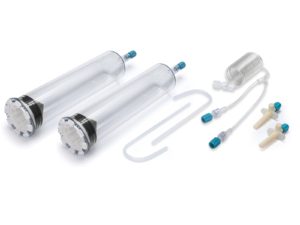
Single-head systems use a single 115-200 mL syringe capacity with straightforward operation and lower maintenance requirements. Dual-head systems mount two syringes side-by-side, with one chamber dedicated to contrast and the other to saline flush.
Single-head systems offer lower capital cost but require manual saline flushing between contrast administration and scan completion. Dual-head systems provide automated protocols with higher upfront investment but deliver advanced capabilities, including multiphasic bolus shaping and reduced contrast consumption.
What Roles Do CT and MRI Injectors Play in Contrast Delivery?
CT injectors are engineered for speed, high volume, and high-pressure delivery alongside X-ray technology for rapid vascular imaging. MRI injectors prioritize safety, steady flow, and absolute magnetic field compatibility for longer-duration scanning protocols.
CT systems operate at high flow rates ranging from 0.5 to 10 mL/sec, while MRI injector systems function at slower rates between 0.5 and 3 mL/sec. CT systems handle 300-600 psi pressure using durable materials, whereas MRI systems utilize non-magnetic materials only with lower pressure requirements for gadolinium-based agents.
Why Compare Dual Syringe and Single Syringe Systems?
Understanding syringe type selection enables healthcare facilities to align equipment capabilities with clinical demands and operational efficiency targets. System configuration directly affects contrast delivery efficiency, workflow bottlenecks, and total cost of ownership across the equipment lifecycle.
What Are the Clinical Advantages of Each System?
Dual-head systems reduce contrast usage by 10-18% through automated saline flushing that maximizes contrast utilization per examination. Syringeless systems eliminate nearly 100% of contrast waste by drawing precise volumes from large multi-patient containers without disposing of partially filled syringes.
Single-head systems lack the advanced bolus shaping capabilities required for complex cardiac and neurological imaging protocols. Dual-head systems require longer staff training periods but enable sophisticated multiphasic protocols that improve diagnostic accuracy in specialized vascular studies.
How Do These Systems Impact Workflow Efficiency?
Syringeless systems save 40.5 seconds of preparation time per exam by eliminating syringe filling and mounting procedures. This efficiency gain translates to throughput increases of 2.6 patients per day per scanner in high-volume imaging centers.
Single-head systems necessitate syringe changes between every patient, creating workflow interruptions that accumulate across daily scanning schedules. Frequent syringe changes in single and dual models generate substantial plastic waste, with syringeless systems offering $8 per patient savings through eliminated disposables.
What Are the Safety Considerations for Each Configuration?
Higher risk of extravasation exists in CT systems due to high-pressure delivery requirements that can force contrast into surrounding tissue. MRI systems require remote setup procedures to maintain a safe distance from the magnetic field during contrast administration.
More complex maintenance is required for dual-head systems with multiple mechanical assemblies and automated saline coordination protocols. CT and MRI injector compatibility affects equipment longevity and integration with existing imaging infrastructure.
How Do Consumer Preferences Shape the Market?
Consumer preferences drive market evolution as healthcare facilities balance clinical capabilities against budget constraints and sustainability initiatives. Decision-makers weigh reliability, total cost of ownership, and vendor support when evaluating competing injector platforms.
What Factors Influence Healthcare Facility Choices?
The global contrast media injectors market was valued at USD 1.6 billion in 2024, with strong growth momentum. Market projections indicate expansion to USD 2.4 to 2.9 billion by 2032-2034 as aging populations increase diagnostic imaging utilization.
Global CAGR is projected between 7.5% and 8.1% for the forecast period across all equipment categories. The U.S. market alone accounts for USD 604.94 million with an accelerated CAGR of 10.08% from 2025 to 2030.
How Are Adoption Trends Evolving Across Facility Types?
Large urban hospitals represent 35% adoption share with a focus on premium, high-throughput systems for complex patient populations. Mid-size hospitals claim 25% adoption share while balancing budget constraints with advanced imaging protocol requirements.
Outpatient imaging centers account for 22% adoption share with rapid growth driven by patient convenience and cost-effective procedures. Suburban facilities hold 12% adoption share with steady expansion, while rural centers represent only 6% adoption share, facing barriers in capital acquisition and specialized staffing.
What Is the Geographic and Demographic Impact on System Usage?
Approximately 40% of radiology volume is now performed in outpatient centers rather than acute-care hospitals. This shift reflects patient preference for convenient access and healthcare system efforts to reduce costs through lower-overhead facilities.
Rural facilities face barriers in capital acquisition and staffing that limit access to advanced imaging technologies. Urban hospitals demonstrate significantly higher adoption rates of sophisticated dual-head and syringeless systems compared to resource-constrained rural centers.
What Are the Technical and Operational Differences?
Technical specifications and operational workflows vary substantially across system configurations, affecting clinical capabilities and facility requirements. Understanding mechanical differences enables informed procurement decisions aligned with imaging volume and protocol complexity.
How Do Single Syringe Systems Function Mechanically and Procedurally?
Single-head injectors hold more than 43% market share as the most established configuration in diagnostic imaging. These systems feature one syringe chamber holding 115-200 mL of contrast with motorized plunger mechanisms for precise volume delivery.
The operation requires technologists to manually attach saline syringes for post-contrast flushing after the primary injection completes. The single syringe system configuration offers straightforward maintenance with fewer mechanical components subject to wear or calibration drift.
What Are the Key Features of Dual Syringe Systems and Their Protocols?
Dual-head systems hold approximately 28% of the market, with growing adoption in specialized imaging centers. These platforms mount two syringes side-by-side, enabling overlapping contrast-saline delivery without manual intervention between injection phases.
Automated protocols coordinate contrast volume, flow rates, and saline flush timing for multiphasic studies, including CT angiography. Contrast media injection systems enable advanced bolus shaping that optimizes vascular enhancement during critical acquisition windows.
How Does Syringeless Technology Compare to Both Syringe-Based Systems?
Syringeless systems use rollers to squeeze precise amounts of contrast from large, multi-patient containers without individual disposable syringes. Multi-use systems utilize approximately 500 mL multi-use containers with automated delivery mechanisms that track remaining volume across multiple patients.
Syringeless systems hold 22% of the market with a 4.8% annual growth rate through 2036, driven by sustainability initiatives. These platforms reduce plastic waste by 85% while eliminating 31.3 liters of wasted contrast over 16-week periods in busy departments.
What Is the Cost and ROI Consideration for Each System?
Financial analysis must account for capital acquisition, ongoing consumables, maintenance contracts, and operational efficiency gains to determine true ownership costs. Power injector medical devices represent significant capital investments requiring multi-year amortization across projected examination volumes.
How Do Initial Capital and Maintenance Costs Compare?
CT injector budget models range from $8,000-$12,000 for basic single-head configurations with standard flow rate capabilities. Mid-range CT systems cost $12,000-$18,000 with enhanced pressure monitoring and protocol memory features.
Premium CT injectors reach $16,000-$24,000 for dual-head systems with advanced bolus shaping and syringeless technology options. MRI injector budget models start at $11,000-$14,000 with non-magnetic construction, while premium MRI systems cost $22,000-$28,000 for remote-operated dual-head configurations.
What Efficiency Gains Affect Return on Investment?
Syringeless systems generate $8 per patient savings through eliminated contrast waste and reduced disposable syringe consumption. Time savings of 40.5 seconds per exam translate to 2.6 additional patients daily, generating substantial revenue increases in high-volume facilities.
Dual-head systems reduce contrast usage by 10-18% through automated saline delivery that maximizes contrast agent utilization. Contrast injector ROI analysis demonstrates payback periods under 18 months for facilities exceeding 6,000 annual contrast-enhanced examinations.
When Is a System Upgrade Justified Based on Usage Volume?
Volume threshold for upgrade typically reaches 6,000 contrast-enhanced exams annually when efficiency gains offset higher capital costs. Facilities exceeding this threshold recover premium system costs through reduced consumables and increased patient throughput within two fiscal years.
Lower-volume facilities under 3,000 annual exams may not achieve positive ROI from premium dual-head or syringeless systems. Mid-range facilities between 3,000 and 6,000 exams should evaluate current growth trajectories and strategic imaging service expansion plans before committing to advanced configurations.
Which Manufacturers and Brands Lead the Market?
Market leadership concentrates among established medical imaging manufacturers with extensive service networks and regulatory approval track records. Tier-one manufacturers leverage prime dealer relationships and proprietary technologies to maintain dominant market positions.
Who Are the Major Players in the Dual and Single Syringe Market?
Bayer holds 38% global market share as the industry leader with Stellant CT and Solaris MRI product lines. ACIST Medical Systems holds 22% market share, specializing in advanced cardiac and vascular imaging platforms.
Bracco holds 15% market share with a focus on efficiency-optimized systems, including syringeless technology platforms. The injector systems segment claims 60.3% share in 2024 within the broader contrast media equipment and consumables market.
How Do Competitive Systems Differ in Features and Pricing?
Bayer Stellant CT and Solaris MRI lines represent industry benchmark systems priced at $17,995 to $19,995 for premium configurations. ACIST Empower CTA+ sells at $19,995 with advanced protocols for cardiac imaging and automated contrast-saline coordination.
Bracco Empower CTA+ and Max 3 syringeless systems compete on waste reduction and operational efficiency messaging to sustainability-focused facilities. Contrast injector service requirements vary by manufacturer, with some offering extended warranty coverage and preventive maintenance programs.
What Are Emerging Trends Among Market Leaders?
Manufacturers increasingly emphasize sustainability through reduced plastic waste and contrast consumption efficiency in marketing messaging and product development. Wireless connectivity and cloud-based protocol management enable remote monitoring and predictive maintenance across distributed imaging networks.
Integration with picture archiving and communication systems streamlines exam documentation and contrast dose tracking for quality assurance programs. Contrast media selection compatibility increasingly influences injector procurement as facilities consolidate vendor relationships to simplify supply chain management.
How Do Imaging Modalities Influence Injector System Choice?
Modality-specific requirements dictate injector specifications, including pressure capabilities, flow rate ranges, and material compatibility with magnetic fields. Clinical protocols for CT versus MRI imaging demand fundamentally different injector characteristics aligned with each modality’s physics and scanning parameters.
What Injector System Features Align with CT Imaging Needs?
CT injector systems hold 58.7% market share, reflecting higher volumes of contrast-enhanced CT procedures globally. High-pressure capabilities reaching 300-600 psi enable rapid bolus delivery for vascular imaging, including pulmonary embolism and trauma protocols.
Flow rates between 0.5-10 mL/sec accommodate varying patient weights and clinical indications from pediatric studies to adult angiography. CT injectors utilize durable materials capable of withstanding repetitive high-pressure cycles across thousands of patient examinations.
How Do MRI Requirements Affect System Selection?
MRI injectors account for 28.5% of the market with specialized non-magnetic construction preventing projectile risks in high-field environments. Remote operation capability maintains a safe distance between operators and magnetic fields during gadolinium contrast administration.
Slower flow rates between 0.5-3 mL/sec align with longer MRI acquisition times and gadolinium-based contrast pharmacokinetics. MRI injectors require compatibility with 1.5T, 3T, and emerging 7T field strengths through comprehensive material testing and certification.
When Are Dual Syringe Systems Preferred for Specific Modalities?
Dual-modality capable systems comprise 12.8% of installations serving facilities requiring flexibility across both CT and MRI applications. Dual syringe systems prove essential for cardiac CT and CT angiography protocols demanding complex multiphasic contrast delivery patterns.
Neurological imaging protocols benefit from dual-head configurations, enabling precise timing between arterial and venous phase acquisitions. Single syringe systems remain adequate for routine diagnostic studies without specialized timing requirements or advanced bolus shaping needs.
Comparative Analysis and Strategic Considerations for Dual vs Single Syringe Systems
Healthcare facilities must evaluate multiple factors beyond initial purchase price when selecting between single and dual syringe system architectures. Strategic alignment between clinical service offerings, patient volume projections, and budget constraints determines optimal system configuration for each facility’s unique operational requirements.
Single syringe systems provide reliable performance for routine diagnostic imaging with lower capital investment and simplified training requirements. Dual syringe systems justify higher costs in specialized centers performing complex vascular and cardiac protocols requiring advanced contrast delivery capabilities. Syringeless technology represents the most operationally efficient configuration for high-volume facilities committed to sustainability initiatives and workflow optimization.
Clinical evidence demonstrates measurable improvements in contrast utilization efficiency and patient throughput when facilities upgrade from single to dual configurations. The decision threshold centers on annual examination volume, with 6,000 contrast-enhanced studies representing the breakeven point where advanced systems generate positive ROI through consumable savings and increased capacity. Facilities planning strategic expansion of cardiac or neurological imaging services should prioritize dual-head systems despite higher capital requirements to enable protocol sophistication demanded by these specialties.
Partner With Spectrum Medical Imaging Co. for Your Contrast Injector Needs
Whether your facility is evaluating a first injector purchase or planning an upgrade from single to dual syringe, the decision involves more than specs on a page. Spectrum Medical Imaging Co. has supported hospitals, imaging centers, and outpatient practices across the West Coast for 30+ years with contrast injector sales, preventative maintenance, and emergency repair services. We carry Guerbet Optistar and Optivantage systems with nationwide sales and service, and we service Medrad and Bracco injectors throughout the Los Angeles area. To discuss which system fits your patient volume, protocols, and budget, contact Spectrum Medical Imaging Co. today!