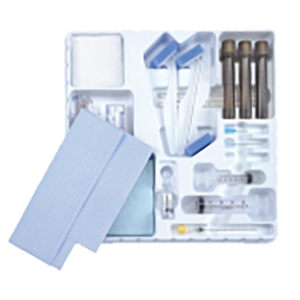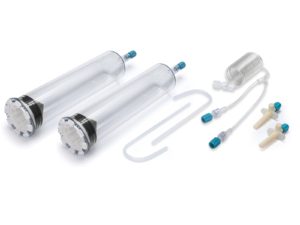
Contrast injection procedures depend on specialized consumables that ensure safe contrast delivery and diagnostic image quality. These essential consumables for high-performance contrast media injector systems include syringes, tubing, valves, and accessories designed for high-pressure applications. Understanding consumable requirements helps radiology departments optimize workflow efficiency while maintaining patient safety standards.
Key Takeaways
- Consumables represent 60.3% of the contrast injector market, with the segment projected to reach USD 8.7 billion by 2032
- Single-head systems require syringe changes between patients, while dual-head configurations reduce contrast usage by 10-18%
- High-pressure tubing must withstand 300-1200 PSI, depending on application and injector system specifications
- Prefilled syringes cost $15-$30 per unit, but reduce preparation time and minimize human error
- Facilities performing 6,000+ exams annually typically justify dual-head system investment through consumable efficiency gains
What Are Contrast Injection Procedures and Their Key Components?
Contrast injection procedures use automated power injectors to deliver contrast media into patients’ vascular systems during diagnostic imaging. These procedures enable visualization of blood vessels, organs, and tissues during CT and MRI examinations.
The primary components include the power injector console, syringe assemblies, high-pressure tubing, check valves, and patient access devices. Each component must meet specific pressure ratings and sterility standards established by FDA clearance requirements.
What Types of Contrast Injectors Are Used?
Single-head injectors utilize one syringe holding 115-200mL of contrast agent for sequential delivery. Dual-head configurations mount two syringes side-by-side for contrast and saline administration. Syringeless systems eliminate traditional disposable syringes by using bulk containers with specialized pump tubing.
Each injector type requires specific consumables matched to its delivery mechanism and pressure specifications. Flow rates vary from 0.5-10 mL/sec for CT applications and 0.5-3 mL/sec for MRI procedures.
What Consumables Are Commonly Required in These Procedures?
Procedure supplies include high-pressure syringes rated for 300-1200 PSI, depending on application requirements. Tubing sets connect the injector to patient access sites with pressure-rated materials. Check valves prevent backflow, while air detection sensors minimize embolism risks during automated delivery sequences.
Additional consumables include sterile adapters, inline filters, and extension sets for specific clinical protocols. Prefilled syringes offer quality-controlled alternatives to manual filling from bulk contrast bottles.
How Do Consumables Affect Procedure Safety and Quality?
Contrast injection consumables directly impact extravasation prevention through proper pressure monitoring and tubing integrity. Air detection systems integrated with tubing sets reduce air embolism risks during high-volume injections. Material quality determines whether syringes and tubing maintain structural integrity under sustained high-pressure conditions.
Sterility failures in consumables can introduce infection risks requiring immediate procedure termination. Consistent contrast delivery depends on syringe plunger mechanics and tubing flexibility throughout the injection cycle.
How Do Different Injector Systems Impact Consumable Needs?
Injector system architecture determines which consumables integrate with specific equipment models and clinical workflows. Single-head, dual-head, and syringeless platforms each require distinct syringe configurations and tubing specifications. Understanding these differences helps facilities align contrast power injector syringes, tubing selection with operational requirements.
Capital equipment choices create long-term consumable commitments due to proprietary connector designs. Facilities must evaluate the total cost of ownership, including ongoing consumable expenses beyond the initial equipment investment.
What Consumables are Used with Single-Head Injector Systems?
Single-head systems utilize one syringe that holds between 115-200mL of contrast agent. Single-head flow rates range from 0.5-10 mL/sec for CT and 0.5-3 mL/sec for MRI applications.
Single-head systems deliver contrast sequentially with saline flushes performed separately. Single-head systems require technologists to change the contrast syringe between every patient. Single-head systems cannot perform overlapping injection patterns.
What Consumables are Specific to Dual-Head Injector Systems?
Dual-head configurations mount two syringes side-by-side: one for contrast and one for saline. Dual-head systems enable simultaneous or precisely programmed sequential injection patterns. Dual-head systems have higher upfront capital investment and increased maintenance requirements.
Dual-head systems require longer staff training periods. These configurations support bolus shaping and fully automated multiphasic protocols for cardiac and oncology imaging.
What are the Consumable Requirements for Syringeless Injectors?
Syringeless power injectors eliminate the need for traditional disposable syringes for each patient. Syringeless systems utilize a bulk contrast container and specialized pump tubing combined with single-use patient tubing. Syringeless injector market growth is limited by the premium cost of equipment and specific proprietary consumables.
These systems automate contrast loading and delivery processes through integrated IT support. Automated data recording reduces manual documentation requirements for technologists.
What Types of Contrast Injection Tubing and Syringes Are Available?
Tubing and syringe variations accommodate different pressure requirements, imaging modalities, and clinical protocols across radiology departments. Material specifications determine compatibility with specific contrast media formulations and injector models. Selection criteria include pressure ratings, sterility assurance, and workflow integration capabilities.
What Are the Features of High-Pressure Tubing?
Standard tubing is rated for 300 PSI (2.07 MPa), while high-pressure lines can withstand up to 1200 PSI (8.3 MPa). High-quality tubing features braided polyurethane or dual-layer nylon and urethane construction. Clear construction enables easy debubbling and positioning during procedure setup.
Tubing length varies from 72 to 120 inches, depending on room configuration and scanner positioning. Luer-lock connectors ensure secure attachment to syringes and patient access devices.
What Advantages Do Prefilled Contrast Syringes Provide?
Prefilled syringes are sterile, single-use glass or plastic syringes manufactured to rigorous quality control standards. Prefilled syringes have a higher per-unit cost compared to bulk contrast media drawn into empty syringes. These products streamline computed tomography procedures and simplify supply orders.
Prefilled options improve procedural safety and reduce preparation time. They minimize human error by eliminating manual filling steps.
How Do Tubing and Syringe Variations Affect Workflow?
Dual-head systems shorten room time per patient versus single-head configurations. Automated protocol selection reduces manual programming requirements for frequently performed examinations. Prefilled syringes eliminate manual filling steps that consume technologist time between patients.
Tubing design affects debubbling efficiency and patient positioning flexibility. Compatible consumables enable rapid turnaround for high-volume imaging centers.
How Do Consumer Priorities Influence Consumable Selection?
Healthcare facility priorities drive purchasing decisions based on safety requirements, cost constraints, and operational efficiency goals. Decision-makers evaluate consumables through multiple criteria, including regulatory compliance and patient throughput targets. Understanding these priorities helps facilities align product selection with strategic objectives.
How Does Safety Influence the Choice of Consumables?
Safety considerations rank highest among facility priorities, with importance scores reaching 95 on a 100-point scale. FDA 510(k) clearance establishes baseline safety standards for injecting contrast media into vascular systems. ACR guidelines define evidence-based protocols for injection techniques and adverse event management.
Extravasation prevention features include pressure monitoring and automatic injection termination. Air detection sensors integrated with tubing sets minimize embolism risks during delivery.
What Role Do Cost and Availability Play?
The global contrast media injectors market is valued at USD 1.96 billion in 2025. Market projected to reach USD 2.86 billion by 2034. The consumables segment held 60.3% market share in 2023.
The contrast media consumables market is estimated at USD 5.3 billion in 2023. The consumables market is projected to reach USD 8.7 billion by 2032. Supply chain reliability affects facility operations when consumable shortages delay scheduled procedures.
How Does Workflow Efficiency Affect Consumable Needs?
Workflow efficiency ranks fourth among consumer priorities with an 80-point importance score. Room time reduction directly impacts patient throughput and revenue generation capacity. Automated protocols minimize manual programming steps for frequently performed examination types.
High-volume facilities prioritize consumables that reduce technologist preparation time between patients. Integration with existing PACS networks streamlines documentation and contrast dose recording.
What Safety Standards and Regulatory Considerations Apply to Consumables?
Regulatory frameworks establish minimum safety requirements for contrast injection consumables used in medical imaging. Compliance verification protects facilities from liability while ensuring patient safety during procedures. Understanding applicable standards guides purchasing decisions for contrast media selection guide for radiology clinics implementing quality assurance programs.
What Are the Key FDA and ACR Guidelines for Consumables?
Equipment requires FDA 510(k) clearance in the United States. The American College of Radiology Manual on Contrast Media provides comprehensive evidence-based guidelines for injection safety. These standards define patient screening protocols, injection techniques, and adverse event management procedures.
Manufacturers must demonstrate substantial equivalence to legally marketed predicate devices. Quality control standards such as ISO 11040-4 govern prefilled syringe manufacturing processes.
How Are Risks Like Extravasation and Air Embolism Mitigated?
Two primary risks associated with power injectors are contrast extravasation and air embolism. Pressure limit controls terminate injections when resistance exceeds safe thresholds. Air detection sensors identify bubbles in tubing before they reach patient circulation.
Extravasation detection systems monitor injection site resistance patterns. Check valves prevent backflow that could introduce air into fluid pathways.
What Training Is Required for Safe Consumable Handling?
Standard operating procedures must address proper syringe loading and tubing priming techniques. Vendor training programs educate technologists on system-specific safety features and troubleshooting protocols. Ongoing competency assessments verify staff proficiency with consumable handling procedures.
Training requirements increase with the operational complexity of dual-head and syringeless systems. Documentation of staff training satisfies regulatory compliance and accreditation standards.
What Factors Should Be Checked Before Purchasing Contrast Injection Consumables?
Consumable purchasing decisions require systematic evaluation of clinical requirements, financial implications, and technical compatibility. Decision frameworks help facilities avoid costly mismatches between equipment capabilities and departmental needs. Thorough pre-purchase assessment prevents operational disruptions from incompatible consumables.
How to Align Consumable Selection with Exam Volume and Case Mix?
The threshold for justifying a dual-head system upgrade is 6,000 exams per scanner annually. Multiphasic cardiac and oncology protocols benefit from dual-head bolus shaping capabilities. Single-head systems suit routine single-phase CT studies and most MRI examinations.
Case mix analysis identifies whether advanced features justify higher consumable costs. Volume projections inform total cost of ownership calculations over the equipment lifecycle.
How to Evaluate Total Cost of Ownership Including Consumables?
Capital equipment costs range from $150,000-$300,000 for single-head systems. Dual-head pricing spans $400,000-$600,000+ for advanced configurations. Annual maintenance contracts add ongoing expenses beyond the initial purchase price.
Consumable costs accumulate based on per-procedure expenses and examination volume. Tubing pricing ranges $2-$8 per unit, with typical box quantities of 25 or 50. Prefilled syringe pricing ranges $15-$30 per syringe, depending on contrast type and volume.
What Are the Considerations for System Compatibility and Vendor Support?
Integration with existing CT/MRI scanners requires compatible communication protocols and mounting configurations. PACS network connectivity enables automated protocol selection and contrast dose documentation. Evaluating how to ensure contrast injector compatibility with your existing imaging equipment prevents costly integration failures.
Vendor support includes technical service availability and maintenance response times. Prime dealer relationships provide access to manufacturer-backed consumables and replacement parts.
What Are the Operational and Cost Implications of Consumables in Contrast Procedures?
Consumable expenses represent high ongoing costs throughout the equipment lifecycle beyond initial capital investment. Operational efficiency gains from optimized consumable selection directly impact departmental profitability and patient satisfaction. Understanding these implications helps facilities maximize return on equipment investments.
How Do Consumables Affect Contrast Usage and Procedure Efficiency?
Dual-head injectors reduce contrast usage by 10-18%. Single-head systems typically result in higher contrast media consumption. Automated saline flush capabilities minimize residual contrast waste in tubing.
Prefilled syringes eliminate manual filling time but increase per-unit costs. Room time reduction from dual-head systems improves patient throughput at high-volume facilities.
What Are the Pricing Ranges for Key Consumables?
Tubing pricing: $2-$8 per unit. Prefilled syringe pricing: $15-$30 per syringe. Tubing is typically sold in boxes of 25 or 50.
Single-head pricing: $150,000-$300,000 capital cost. Dual-head pricing: $400,000-$600,000+ capital cost. Annual consumable expenses vary based on examination volume and case mix complexity.
How Can Consumable Choices Impact Facility ROI?
Contrast savings from dual-head systems offset higher capital costs at volumes exceeding 6,000 exams annually. Reduced room time increases scanner utilization and revenue generation capacity. Workflow efficiency gains reduce staffing requirements per examination.
Supply chain reliability from established vendors minimizes procedure delays from consumable shortages. Contrast media pricing trends and what hospital procurement teams should expect affect long-term budget planning and vendor negotiations.
Consumables Needed for Contrast Injection Procedures: Integration of Components, Safety, and Efficiency
Successful contrast injection programs require thoughtful integration of consumables with equipment capabilities and departmental workflows. Syringe, tubing, valves, and other procedure supplies must meet pressure specifications while supporting clinical protocols. Safety standards and regulatory compliance establish baseline requirements that protect patients and facilities.
Cost considerations extend beyond unit pricing to include total ownership expenses throughout the equipment lifecycle. Contrast media injection systems choosing between single and dual head models determines long-term consumable requirements and operational capabilities. Facilities must balance upfront investment against operational savings and clinical capabilities.
Vendor relationships significantly impact consumable availability and technical support quality. Organizations like Spectrum Medical Imaging Co. provide prime dealer access to manufacturer-backed consumables and lifecycle support. How to evaluate contrast media vendors ensures facilities select partners offering reliable supply chains and responsive service.
Regular equipment maintenance preserves consumable compatibility and injection accuracy throughout the system lifecycle. Contrast injector service in Los Angeles, professional maintenance for medical facilities prevents costly failures that disrupt patient care.
Stock Your Injector Suite with a Partner Who Knows Every Component
Contrast injection procedures run on precision, and so does a well-supplied radiology department. From high-pressure syringes and tubing sets to check valves and sterile adapters, Spectrum Medical Imaging Co. carries the consumables your injector systems require, backed by 30+ years of hands-on experience in medical imaging supply and service. Whether you’re running single-head CT protocols or dual-head MRI workflows, our team can help you match the right components to your equipment and volume. Contact us at Spectrum Medical Imaging Co. today to speak with a specialist about your consumable needs.