Contrast agents are essential in diagnostic imaging by modifying how X-rays, magnetic fields, or ultrasound waves interact with body tissues. The distinction between positive and negative agents fundamentally shapes how radiologists visualize internal structures across multiple imaging modalities.
Key Takeaways
- Positive contrast agents increase X-ray attenuation and include iodinated compounds, barium sulfate, and gadolinium-based agents
- Negative contrast agents like air and carbon dioxide decrease attenuation to create darker areas on images
- Iodinated contrast carries a 20-40% risk of nephropathy in patients with eGFR below 30 ml/min
- Gadolinium agents cost 4 to 5 times more than iodinated compounds but present lower allergic reaction rates
- Group II macrocyclic GBCAs reduce NSF risk to less than 0.07% even in severe kidney disease
The classification reflects physical properties that determine image appearance and diagnostic value. Positive contrast agents produce bright, radiopaque areas on images, ideal for highlighting blood vessels, organ structures, and pathological abnormalities. Negative contrast agents create dark, radiolucent regions that provide complementary diagnostic information, particularly in gastrointestinal imaging.
What Are Positive and Negative Contrast Agents?
Positive contrast agents increase X-ray attenuation within the body, making targeted structures appear brighter on diagnostic images. These radiopaque materials absorb X-rays more readily than surrounding tissues due to their high atomic number elements. Common examples include iodinated compounds used in CT angiography and barium sulfate suspensions for gastrointestinal examinations.
Negative contrast agents decrease X-ray attenuation and allow more radiation to reach the detector, creating darker areas on images. Air and carbon dioxide gas serve as the primary negative contrast agents in clinical practice. These radiolucent substances prove particularly valuable in CT colonography and double-contrast gastrointestinal studies, where gas distention provides diagnostic clarity without the risks associated with iodine-based and gadolinium-based agents in diagnostics.
How Do Positive Contrast Agents Work?
Positive contrast agents increase X-ray attenuation and are radiopaque materials that block radiation transmission. Elements with high atomic numbers, such as iodine and barium, absorb X-ray photons efficiently, preventing them from reaching the detector. This absorption creates a physical shadow that appears white or bright on the radiograph, clearly delineating vascular structures, organ boundaries, and abnormal tissue masses.
The degree of X-ray attenuation depends on both the atomic number of the contrast element and its concentration within the tissue. Higher concentrations produce greater attenuation and brighter images. This relationship allows radiologists to adjust contrast agent dosage based on patient size, clinical indication, and required image quality.
How Do Negative Contrast Agents Work?
Negative contrast agents decrease X-ray attenuation and are radiolucent substances that allow radiation to pass through more easily than surrounding tissues. Air and carbon dioxide gas contain low-density molecules that offer minimal resistance to X-ray photons. When introduced into body cavities, these gases create dark areas on images by permitting greater radiation transmission to the detector.
The lower atomic number and reduced density of gas molecules explain their radiolucent properties, making them ideal for distending hollow organs like the colon or stomach. The resulting air-tissue interface provides clear anatomical definition without chemical toxicity or allergic reactions.
What Are Common Examples of Each Type?
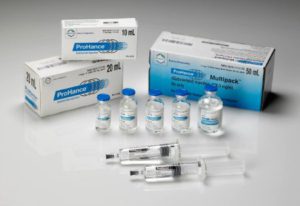
Iodinated compounds and barium sulfate are positive contrast agents used extensively across CT, X-ray, and fluoroscopic procedures. Omnipaque (iohexol) by GE HealthCare represents the most widely used positive iodinated contrast agent. Isovue (iopamidol) by Bracco and Optiray (ioversol) by Guerbet are additional nonionic low-osmolality iodinated agents widely used across CT and angiographic protocols.Gadavist (gadobutrol) by Bayer is a macrocyclic GBCA with Group II classification under ACR guidelines, used widely across CNS, body, and vascular MRI protocols.
Air and carbon dioxide gas are negative contrast agents that create radiolucent areas for gastrointestinal and specialized imaging studies. Readi-Cat, a low-density barium sulfate oral suspension, functions as a positive contrast agent for GI CT bowel preparation administered orally to opacify the GI lumen. Lumason (sulfur hexafluoride lipid-type A microspheres) by Bracco is an FDA-approved ultrasound contrast agent for liver lesion characterization, offering a non-iodinated, non-gadolinium positive contrast option for facilities seeking to reduce radiation and renal risk. Definity (perflutren lipid microspheres) is an FDA-approved ultrasound contrast agent primarily indicated for cardiac left ventricular opacification and endocardial border delineation in patients with suboptimal echocardiograms.
How Do Contrast Agents Differ by Imaging Modality?
Contrast agent selection varies significantly based on the imaging technology employed, as each modality relies on different physical principles to generate diagnostic images. CT imaging utilizes X-ray attenuation differences enhanced by iodinated compounds, while MRI depends on magnetic field interactions modified by gadolinium chelates. Understanding the underlying imaging physics guides clinicians toward the appropriate agent for each diagnostic scenario.
The distinction extends beyond chemical composition to fundamental differences in the mechanism of action, biodistribution, and elimination pathways. CT contrast types include both positive and negative agents designed specifically for X-ray-based imaging. MRI contrast polarity considerations involve T1-shortening agents that brighten tissues versus T2 agents that create darker signals, though the vast majority of clinical MRI contrast agents function as T1-shortening positive agents.
What Distinguishes MRI Contrast Agents from CT Contrast Agents?
Gadolinium is superior for CNS and soft tissue MRI without ionizing radiation, providing unparalleled detail of brain structures, spinal cord pathology, and inflammatory processes. Iodine is optimal for rapid, high-resolution vascular and bone imaging via CT, excelling in emergency trauma evaluation and coronary artery assessment. CT contrast relies on the high atomic number of iodine to block X-rays, creating physical shadows that delineate anatomical structures.
MRI contrast alters the magnetic properties of nearby water molecules, shortening T1 relaxation times to enhance signal intensity on T1-weighted sequences. Gadolinium chelates modify the behavior of hydrogen protons in surrounding tissues. This fundamental difference means MRI contrast agents require significantly smaller volumes compared to iodinated agents while providing superior soft tissue differentiation.
How Do Barium and Iodine Contrast Agents Compare?
Barium cannot be injected into the bloodstream and is limited to digestive system imaging via oral or rectal administration. Iodine-based media are water-soluble and highly versatile, allowing intravenous, intra-arterial, oral, and rectal routes. Gastrografin (diatrizoate meglumine and diatrizoate sodium), a water-soluble oral/rectal iodinated contrast, is commonly used when barium is contraindicated due to suspected perforation. Barium is restricted to imaging the digestive system, where its insoluble suspension provides excellent mucosal coating for detecting ulcers, polyps, and structural abnormalities.
Higher risk of systemic reactions occurs from iodinated agents compared to barium, including allergic-like responses and contrast-induced nephropathy. Barium’s localized use in the gastrointestinal tract minimizes systemic absorption, though leakage into the peritoneal cavity from perforation can cause severe barium peritonitis requiring surgical intervention.
When Is Each Type Preferred Clinically?
Iodinated agents are preferred for vascular imaging, trauma assessment, and any examination requiring intravenous administration to opacify blood vessels or enhance solid organs. CT angiography, pulmonary embolism protocols, and oncological staging require iodinated contrast to achieve diagnostic-quality images. Gadolinium-based contrast agents are preferred for MRI examinations of the brain, spine, and joints, where soft tissue detail takes precedence.
Barium remains the agent of choice for dedicated gastrointestinal fluoroscopic studies, including barium swallow, upper GI series, and barium enema examinations. Its insolubility provides prolonged mucosal coating that allows dynamic real-time visualization of swallowing mechanics and bowel motility. Air or carbon dioxide serves as the negative contrast component in double-contrast studies, where gas distention combined with a thin barium coating maximizes the detection of small mucosal lesions. Common barium portfolio agents used across these procedures include E-Z-HD (a high-density barium sulfate suspension optimized for double-contrast mucosal coating studies), Breeza (a low-density flavored oral suspension designed for CT bowel preparation and patient comfort), and Genus Citra by Genus (a citrate-based oral barium formulation used for GI CT preparation).
What Are the Safety and Efficacy Considerations?
Patient safety considerations dominate contrast agent selection, with renal function status serving as the primary determinant for iodinated and gadolinium-based agents. Contrast-induced nephropathy and nephrogenic systemic fibrosis represent the most serious potential complications, though modern agents and careful patient screening have dramatically reduced incidence rates. Comprehensive pre-procedure assessment, including estimated glomerular filtration rate calculation and allergy history review, enables clinicians to identify at-risk patients.
The balance between diagnostic efficacy and safety risk varies across patient populations, requiring individualized decision-making based on clinical urgency and available alternatives.
What Are the Risks Associated with Iodinated Contrast?
Contrast-induced nephropathy (CIN) is kidney damage from iodinated contrast that occurs when the toxic effects of iodine overwhelm renal clearance mechanisms. Between 20-40% of patients with eGFR below 30 ml/min may develop CIN from iodinated contrast, with 5% potentially experiencing permanent renal damage requiring dialysis. Severe allergic reactions occur in approximately 1 in 100,000 patients, manifesting as anaphylaxis, bronchospasm, or cardiovascular collapse.
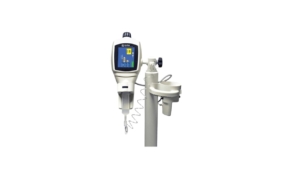
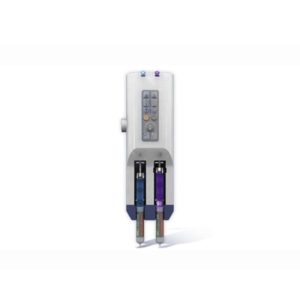
Contrast-induced nephropathy occurs particularly in patients with eGFR below 30 ml/min, where pre-existing renal impairment reduces the kidney’s ability to excrete iodinated compounds. Risk mitigation strategies include adequate pre-procedure hydration, use of low-osmolality non-ionic agents, and iso-osmolar agents such as Visipaque (iodixanol) by GE HealthCare for patients at the highest renal risk, and minimizing contrast volume through contrast media injection systems, choosing between single and dual-head models that optimize delivery. Post-procedure monitoring of serum creatinine levels identifies developing nephropathy.
What Are the Safety Concerns for Gadolinium-Based Agents?
Nephrogenic Systemic Fibrosis (NSF) is a condition linked to gadolinium in severe kidney disease, causing progressive skin thickening and internal organ fibrosis. Gadolinium allergic reactions occur in less than 1 in 170,000 patients, representing a significantly lower rate than iodinated agents. Risk of NSF from newer Group II macrocyclic GBCAs is less than 0.07%, even in patients with advanced kidney disease. Older linear GBCAs, such as Magnevist (gadopentetate dimeglumine) by Bayer, carry a significantly higher NSF association and are now largely avoided in patients with impaired renal function.
NSF risk in patients with severe chronic kidney disease (eGFR below 15 ml/min) from older linear GBCAs prompted widespread adoption of more stable macrocyclic formulations. Group II agents like Dotarem can improve MRI imaging outcomes in healthcare facilities through superior chemical stability that prevents free gadolinium ion release. Vueway by Bracco and Elucirem (gadopiclenol) by Guerbet are among the newer Group II macrocyclic agents offering equivalent or improved chemical stability profiles. Modern clinical practice heavily favors macrocyclic agents, effectively eliminating NSF as a significant clinical concern.
How Do Patient Factors Influence Agent Selection?
Comprehensive pre-procedure assessment of renal function (eGFR) is mandatory before administering any iodinated or gadolinium-based contrast agent. The estimated glomerular filtration rate calculation identifies patients at elevated risk for contrast-induced nephropathy or nephrogenic systemic fibrosis. Premedicate or consider a different agent for patients with prior allergic-like reactions.
Age-related physiological changes warrant dose reduction, with clinical guidelines recommending reducing contrast dose by at least 10% for elderly patients. Diabetic nephropathy, hypertension, and concurrent nephrotoxic medications all increase baseline renal injury risk. Pregnancy status requires careful risk-benefit analysis, as balancing safety and clarity determines the use of contrast media in diagnostics during gestational imaging.
How Do Cost and Market Trends Impact Contrast Agent Use?
Economic factors significantly influence contrast agent selection, particularly in budget-constrained healthcare systems. The global contrast media market reached USD 7.31 billion in 2025, with projections indicating growth to USD 13.86 billion by 2033 at an 8.39% compound annual growth rate.
Supply chain disruptions periodically impact contrast agent availability, forcing facilities to adjust protocols. Recent iodinated contrast shortages required hospitals to implement conservation strategies, including dose reduction protocols and prioritization systems. These market pressures underscore the importance of establishing relationships with reliable suppliers who provide transparent contrast media pricing trends 2025 information for hospital procurement teams.
What Is the Price Range of Different Contrast Agents?
Gadolinium agents are 4 to 5 times more expensive than iodinated compounds, with typical costs ranging from $100 to $600 per dose compared to $20 to $150 for iodinated media. This price differential reflects more complex manufacturing processes and patent protections on newer macrocyclic formulations. Barium-based media represent the most economical option at $15 to $80 per dose, though their application remains limited to gastrointestinal imaging.
Microbubble ultrasound contrast agents occupy the premium tier at $150 to $700 per dose. Despite higher unit costs, facilities may achieve overall cost savings by substituting ultrasound with contrast for certain indications traditionally requiring CT or MRI. Volume purchasing agreements and comprehensive lifecycle management programs help facilities control expenses while ensuring reliable access.
How Do Consumer Preferences Affect Usage?
Safety Profile rated 95% importance by consumers, reflecting heightened awareness of contrast-induced nephropathy and allergic reactions. Efficacy and Image Quality were rated 88% importance, as diagnostic accuracy directly impacts treatment decisions. Cost is rated 72% importance, acknowledging budget constraints while recognizing that safety and quality cannot be compromised.
Availability is rated 68% importance, particularly following recent supply disruptions. Patient Comfort rated 65% importance, encompassing factors like injection site pain, contrast warmth sensation, and volume of fluid administered. These preference rankings drive manufacturers toward developing high-relaxivity agents that provide equivalent image quality at reduced doses.
What Are Recent Innovations and Expert Recommendations?
Technological advancement continues to refine contrast agent formulations, delivery systems, and dosing protocols to maximize diagnostic value while minimizing patient risk. Recent innovations focus on developing alternatives to traditional gadolinium-based compounds, including manganese-based agents showing promise in early clinical trials. Artificial intelligence applications now enable precise dose calculation based on patient-specific factors.
Clinical guidelines from the American College of Radiology and other professional organizations evolve continuously to incorporate new safety data and best practices.
What New Contrast Agents Are Emerging?
Group II macrocyclic GBCAs are newer gadolinium-based contrast agents with superior chemical stability that virtually eliminate NSF risk even in severe renal impairment. Lumason (sulfur hexafluoride lipid-type A microspheres) by Bracco is an FDA-approved ultrasound contrast agent for liver lesion characterization, representing a non-iodinated, non-gadolinium positive contrast option. Gadopiclenol provides comparable efficacy at up to 60% lower dose of gadolinium, directly addressing safety concerns about cumulative brain deposition.
Manganese-based MRI contrast agents represent the most significant emerging technology, with GE HealthCare completing Phase I trials demonstrating good tolerability without serious adverse events. These novel compounds may eventually replace gadolinium entirely for certain indications, eliminating concerns about long-term tissue retention.
What Do Clinical Guidelines Advise?
Clinical guidelines recommend reducing contrast dose by at least 10% for elderly patients to account for age-related decline in renal clearance capacity. Comprehensive pre-procedure renal function assessment remains mandatory for all patients receiving iodinated or gadolinium-based agents. Guidelines specify eGFR thresholds below which alternative imaging should be considered, with eGFR below 30 ml/min for iodinated agents and below 15 ml/min for older gadolinium agents triggering heightened caution.
Premedication protocols for patients with prior allergic-like reactions include corticosteroids and antihistamines administered 12 hours before and immediately before contrast administration. For patients with severe prior reactions, the benefits of Omnipaque for radiology imaging professionals include a low osmolality formulation that reduces reaction risk.
How Are AI and Technology Influencing Dosage Optimization?
Utilize AI and machine learning tools to calculate the minimum effective dose based on patient weight, body composition, and specific clinical indication. Algorithms analyze historical imaging data to identify optimal contrast volumes that consistently produce diagnostic-quality images while minimizing unnecessary exposure. These systems integrate directly with contrast injection equipment, automatically adjusting parameters without requiring manual technologist calculation.
Advanced injector technology enables precise timing and delivery rate control, optimizing contrast enhancement during the critical imaging window. Dual-flow protocols separate saline flush from contrast bolus, reducing total iodine volume while maintaining adequate vascular opacification.
How Do Demographics Influence Contrast Agent Usage?
Patient demographic characteristics significantly impact contrast agent utilization patterns, with age representing the strongest predictor of imaging frequency. Healthcare utilization data shows imaging spending generally increases with age until patients reach approximately 80-85 years old. Pediatric populations require specialized dosing protocols and heightened radiation awareness.
Geographic variation in contrast agent adoption reflects differences in healthcare infrastructure, economic resources, and access to advanced imaging technology.
How Does Age Affect Contrast Agent Administration?
Children (0-17 years) account for 4% of imaging examinations, with strictly limited contrast use due to concerns about cumulative radiation exposure and developing kidney function. Adults (18-64 years) represent 66% of imaging examinations, comprising the majority of routine diagnostic imaging. Older Adults (65 years and over) account for 30% of imaging examinations, representing the highest-risk population for contrast-induced nephropathy.
Age-related physiological changes require modified dosing strategies, particularly regarding renal clearance capacity and cardiovascular stress tolerance. Elderly patients often receive reduced contrast volumes calculated based on body weight and measured renal function. Pediatric dosing demands even greater precision, with weight-based calculations ensuring adequate image quality.
What Are Urban Vs. Rural Adoption Patterns?
Rural facilities face limited access to advanced MRI or CEUS technology due to budget constraints and insufficient patient volumes to justify capital investments. Urban healthcare centers maintain comprehensive contrast agent inventories, including premium macrocyclic GBCAs and specialized agents. This disparity creates geographic variation in diagnostic capabilities.
Telemedicine and remote image interpretation partially mitigate geographic disparities by allowing rural facilities to obtain expert consultation on contrast protocol selection. However, physical access to advanced imaging technology remains concentrated in metropolitan areas.
How Do Patient Preferences Vary Across Populations?
Patient safety awareness drives demand for lower-dose contrast options, with consumers increasingly requesting information about cumulative gadolinium exposure and brain deposition. Younger populations demonstrate higher technology acceptance, showing willingness to travel to facilities offering advanced contrast agents with superior safety profiles. Older patients often prioritize proximity and convenience.
Cultural factors influence contrast acceptance, with some populations expressing heightened concern about foreign substances. Educational interventions help address misconceptions while respecting individual values. Shared decision-making models incorporate patient priorities regarding safety, comfort, and cost into clinical decision pathways.
What Are the Key Technical Differences Between Contrast Agent Types?
Technical specifications of contrast agents determine their suitability for specific imaging applications. Physical properties, including osmolality, viscosity, and iodine concentration, directly impact injection protocols, image quality, and patient comfort. Chemical structure governs pharmacokinetics, biodistribution, and elimination pathways.
The mechanism of action fundamentally differs between X-ray-based and MRI contrast agents, reflecting the distinct imaging physics underlying each modality. Iodinated and barium agents physically block radiation transmission, creating shadows visible on radiographs and CT images. Gadolinium compounds modify magnetic field interactions without directly producing a signal.
How Does X-ray Attenuation Vary Between Agents?
X-ray attenuation varies directly with atomic number and concentration, with iodine (atomic number 53) and barium (atomic number 56) providing strong positive contrast. Higher iodine concentrations, typically ranging from 300 to 400 mg/ml, produce greater attenuation and brighter images on CT scans. Air and carbon dioxide, containing primarily nitrogen, oxygen, and carbon with low atomic numbers, provide minimal attenuation.
The mathematical relationship follows the photoelectric effect, where attenuation probability increases approximately with the cube of atomic number. This explains why elements with atomic numbers above 50 produce clinically useful positive contrast.
What Are the Chemical and Physical Properties of Each Agent?
Iodinated Contrast Media holds 55-60% market share, reflecting its dominant role in high-volume CT and angiographic procedures worldwide. Gadolinium-Based agents hold 25-30% market share, driven by expanding MRI utilization for neurological and musculoskeletal applications. Barium-Based Media holds 10-12% market share, limited primarily to dedicated gastrointestinal fluoroscopic examinations.
Microbubble Agents hold 5-6% market share despite rapid growth, constrained by specialized applications in cardiac and liver imaging. Microbubble agents have a short half-life, typically lasting only minutes in circulation.
How Do Mechanisms of Action Differ?
Iodinated agents work by attenuating the X-ray beam through photoelectric absorption, where iodine atoms capture incident photons and prevent them from reaching the detector. This physical interaction creates image contrast based purely on differential radiation absorption.
Gadolinium agents work by enhancing proton relaxivity in a magnetic field, shortening T1 relaxation times of nearby water molecules without generating a direct MRI signal. Unpaired electrons in the gadolinium ion create strong local magnetic fields that accelerate proton energy dissipation after radiofrequency excitation.
Synthesis of Positive and Negative Contrast Agent Differences and Their Clinical Implications
The fundamental distinction between positive and negative contrast agents reflects their opposing effects on image appearance, with positive agents creating bright radiopaque areas and negative agents producing dark radiolucent regions. Clinical practice predominantly employs positive contrast agents, including iodinated compounds for CT, gadolinium chelates for MRI, and barium suspensions for gastrointestinal fluoroscopy. Negative agents serve specialized roles primarily in gastrointestinal imaging.
Safety considerations dominate modern contrast agent selection, with renal function status determining appropriateness of iodinated and gadolinium-based compounds. The evolution toward Group II macrocyclic gadolinium agents has virtually eliminated NSF risk, while low-osmolality non-ionic iodinated agents have reduced allergic reaction rates. Emerging technologies, including manganese-based MRI contrast and AI-driven dose optimization, promise further improvements in safety profiles.
Understanding how bridging technology and medicine drives the evolution of contrast media in imaging enables healthcare facilities to implement evidence-based protocols that balance competing priorities of safety, efficacy, and cost. Market trends indicate continued growth in contrast agent utilization driven by aging demographics and expanding access to advanced imaging technology.
Build a Stronger Contrast Media Program with Spectrum Medical Imaging Co.
Spectrum Medical Imaging Co. has supported hospitals, imaging centers, surgery centers, and private practices across the West Coast for over 30 years. Our team provides direct access to a comprehensive range of contrast agents—iodinated, gadolinium-based, barium, and ultrasound contrast—backed by prime dealer partnerships with GE HealthCare, Guerbet, Bayer, and Bracco. We combine competitive pricing, expert consultation, and a nationwide distribution network with 24–48 hour delivery to keep your contrast media program running without interruption. Contact us to speak with a specialist and build a customized contrast media supply plan for your facility.