Omnipaque and Isovue are two of the most established iodinated contrast agents used in CT imaging departments across hospitals, medical centers, and outpatient imaging facilities. Both belong to the low-osmolar contrast media (LOCM) class and are used across routine CT scans, angiography studies, and other contrast-enhanced diagnostic imaging. Understanding how they differ helps imaging directors match an agent to their case mix, protocols, and supplier relationships. Spectrum Medical Imaging Co. stocks both agents as part of a full line of CT and MRI contrast media, backed by 30+ years in medical imaging.
Key Takeaways
- Omnipaque (iohexol, GE HealthCare) and Isovue (iopamidol, Bracco) are both non-ionic, low-osmolar iodinated contrast agents widely used in CT imaging.
- The two agents share a similar overall safety profile as members of the same low-osmolar contrast media (LOCM) class.
- Isovue is commonly noted for strong vascular enhancement, which makes it a frequent choice for angiography and cardiac CT work.
- Omnipaque is commonly noted for consistent overall image quality across mixed CT applications, including body and neurological imaging.
- Spectrum Medical Imaging Co. stocks both Omnipaque and Isovue with nationwide shipping; call 800-859-6162 to compare options for your department.
Here’s how Omnipaque and Isovue compare across chemistry, clinical use, safety, and practical selection criteria, along with a decision-point breakdown to help you choose between them. The goal is a clear, side-by-side reference, not a case for one agent over the other.
Omnipaque vs. Isovue: What Are These Contrast Agents?
Omnipaque and Isovue are both non-ionic iodinated contrast agents designed to enhance vascular and soft tissue visualization during CT imaging. GE HealthCare manufactures Omnipaque, containing iohexol, while Bracco produces Isovue, containing iopamidol. Both work the same basic way: the iodine in each agent increases X-ray attenuation in blood vessels and organs, so contrast-carrying structures appear brighter and easier to read on a CT scan.
Chemically, both agents fall into the same well-established category: small-molecule, non-ionic iodinated contrast agents built on an iodinated aromatic structure, meaning the iodine atoms attach to a benzene-ring backbone engineered to carry as much iodine as possible per molecule. Iodine’s usefulness here comes down to basic physics. It sits among the high atomic number elements, which absorb X-rays far more strongly than the soft tissue around them, and that absorption difference is what creates visible contrast on the image. This is also what separates Omnipaque and Isovue from magnetic resonance contrast agents: MRI relies on magnetic resonance rather than X-rays, so MRI contrast agents work through an entirely different mechanism and are not interchangeable with iodinated CT agents. A small number of specialized CT studies use other approaches entirely, such as inhaled xenon gas for ventilation imaging, but that is a distinct technique from the IV iodinated contrast this guide covers.
Both agents serve overlapping clinical indications, spanning routine CT scans, CT angiography, and general contrast-enhanced diagnostic imaging. They are classified as low-osmolar contrast media (LOCM) with a non-ionic molecular structure, a category that replaced the older ionic, high-osmolar contrast agents used decades ago. Non-ionic structure matters because it reduces the charged particles that can trigger adverse reactions, which is a core reason LOCM agents like these two now represent the standard of care for intravascular contrast.
Omnipaque vs. Isovue: Side-by-Side Comparison
The table below summarizes how the two agents compare across the factors that matter most to a purchasing or protocol decision.
| Attribute | Omnipaque | Isovue |
| Active compound | Iohexol | Iopamidol |
| Manufacturer | GE HealthCare | Bracco |
| Classification | LOCM, non-ionic | LOCM, non-ionic |
| Commonly noted strength | Consistent overall image quality across mixed CT applications | Strong vascular enhancement |
| Typical use emphasis | Body imaging, neurological studies, routine contrast-enhanced CT | CT angiography, cardiac CT, vascular mapping |
| Safety profile | Favorable, consistent with the LOCM class | Favorable, consistent with the LOCM class |
| Cost per dose | Comparable to Isovue within typical purchasing agreements | Comparable to Omnipaque within typical purchasing agreements |
| Osmolality | Low, within the standard LOCM range | Low, within the standard LOCM range |
Both agents are well-documented, widely used, and supported by established manufacturer relationships. The differences that matter most for a given facility usually come down to case mix and existing vendor relationships rather than a large gap in any single category.
Clinical Performance: Image Quality and Vascular Enhancement
Differences between Omnipaque and Isovue show up more in emphasis than in safety. Both deliver diagnostic-quality contrast enhancement across standard CT protocols, but each has a reputation for a particular strength.
Omnipaque is commonly regarded for consistent, reliable overall image quality across a broad range of CT applications, including body imaging and neurological studies. Isovue is commonly noted for strong vascular enhancement, which makes it a frequent choice for CT angiography, cardiac CT, and vascular mapping procedures where sharp vessel opacification matters most. Departments with a heavier cardiac or vascular imaging load often lean toward Isovue for that reason, while departments with a broader mix of body and neuro studies often find Omnipaque a strong general-purpose fit.
Neither reputation implies the other agent performs poorly outside its typical strength. Both are used across the same core indications, and many departments stock both to match the agent to the study.
Common Clinical Applications of Contrast-Enhanced CT
Because CT imaging already uses ionizing radiation to build a cross-sectional picture of the body, adding an iodinated contrast agent like Omnipaque or Isovue improves what that radiation dose can reveal. Contrast-enhanced CT with either agent supports a range of diagnostic tasks beyond routine body imaging.
In neurological studies, contrast can help evaluate suspected vascular causes behind brain bleeds, such as aneurysms or malformations, through CT angiography. CT is also used to evaluate sinus conditions, where contrast may help distinguish infection or masses from ordinary congestion. Specialized CT perfusion protocols use contrast to assess cerebral blood flow, which supports stroke evaluation and other neurological workups. In oncology imaging, contrast-enhanced CT can help characterize a tumor’s vascularity, including microvascular changes tied to tumor angiogenesis, which supports diagnosis and treatment planning alongside other imaging and pathology findings.
These applications rely on the same core mechanism as routine contrast-enhanced CT: the iodine in Omnipaque or Isovue increases X-ray attenuation in the tissue or vessel of interest, making it stand out clearly on the resulting image. Both agents share a similar biodistribution profile as well: after injection, they move through the extracellular space and clear from the body primarily through the kidneys, without concentrating inside cells. That predictable distribution is part of why the resulting images support reliable morphological assessment, letting radiologists judge the size, shape, and structure of organs and vessels with confidence.
Safety Profiles and Adverse Reactions
Omnipaque and Isovue share a similar safety profile as non-ionic LOCM agents. This class carries a substantially better safety record than the older ionic, high-osmolar agents it replaced, largely because the non-ionic structure reduces the charged particles associated with histamine release and adverse reactions. Reactions to either agent are typically mild, such as a warm sensation, nausea, or a metallic taste, and these usually resolve without treatment. Serious allergic reactions are uncommon with either agent but remain possible, which is why every facility maintains pre-screening and emergency response protocols regardless of which LOCM agent it uses.
Kidney function is the other safety consideration. Iodinated contrast can stress the kidneys, and patients with significantly reduced kidney function face a higher risk of contrast-induced kidney injury. This risk applies similarly to both Omnipaque and Isovue, since it relates to the LOCM class generally rather than to a difference between the two specific agents. Renal protection strategies, including pre-hydration and minimizing contrast volume, apply the same way regardless of which agent a department selects. Facilities should follow current product labeling and their own screening protocols, including kidney function testing through a blood test, before administering either agent.
Cost and Availability Considerations
Cost differences between Omnipaque and Isovue are typically modest within a given purchasing agreement, and most facilities find the per-dose economics broadly comparable. The bigger cost factors tend to be volume-based purchasing agreements, group purchasing organization terms, and total annual contrast spending rather than a meaningful price gap between the two products themselves.
Availability is shaped by each manufacturer’s distribution network and a facility’s existing supplier relationships. GE HealthCare and Bracco both maintain established supply chains supporting high-volume imaging departments, and working with a supplier that carries both agents gives a department flexibility if one manufacturer experiences a temporary allocation constraint. Spectrum Medical Imaging Co. offers nationwide shipping for contrast media, which helps departments in any region maintain consistent stock of either agent.
Many imaging centers source Omnipaque and Isovue alongside contrast agents from other manufacturers, such as Bayer Healthcare, as part of a broader contrast media strategy. Consolidating orders across the wider contrast media market with one distributor, rather than managing separate accounts per manufacturer, simplifies purchasing and helps a department negotiate more effectively on volume.
Osmolality and Patient Experience
Osmolality affects patient comfort and the physiologic response to contrast during injection. Both Omnipaque and Isovue fall within the low-osmolar range that defines the LOCM class, well below the older high-osmolar ionic agents. Lower osmolality reduces the fluid shift, warmth sensation, and mild discomfort that patients can experience during injection, compared with older contrast materials.
Exact osmolality varies slightly by concentration and formulation within each product line, and current values are published on each product’s labeling. In practice, the difference between Omnipaque and Isovue at matched concentrations is small enough that most departments do not select one agent over the other on osmolality alone; clinical use case and vendor relationship tend to carry more weight.
What Patients Can Expect During a Contrast-Enhanced CT
Patients preparing for a contrast-enhanced CT scan with either agent generally follow a similar process. Staff typically confirm kidney function through a recent blood test, review allergy history, and ask the patient to change into a hospital gown for the exam. An IV line delivers the contrast agent, usually through a power injector, timed to the CT scan.
Because Omnipaque and Isovue share the same non-ionic LOCM safety profile, patient preparation does not usually change based on which of the two agents a department uses. The screening and monitoring that protect the patient are the same either way, which is one more reason many departments treat the choice between these two agents as an operational and clinical-fit decision rather than a safety one.
Decision Point: Choosing Between Omnipaque and Isovue
Bringing the comparison together, the choice usually comes down to case mix, existing relationships, and protocol fit rather than a clear overall winner.
Consider Omnipaque when your department’s caseload centers on a broad mix of body imaging, neurological studies, and routine contrast-enhanced CT, where consistent general-purpose image quality is the priority. It also makes sense if your facility maintains existing GE HealthCare equipment relationships or purchasing agreements that favor a consolidated vendor.
Consider Isovue when vascular imaging makes up a meaningful share of your volume, particularly CT angiography, cardiac CT, and vascular mapping studies where vessel opacification is the priority. It also fits well if your facility already works with Bracco or wants a dedicated agent for a growing cardiac CT program.
Consider stocking both when your department runs a genuinely mixed caseload, since many imaging centers keep both agents on hand and select between them by study type. In that setup, the decision shifts from “which agent” to “which agent for this protocol,” and having both available offers the most flexibility.
Whichever direction fits your facility, both agents meet the same regulatory standards and support the same core patient-safety protocols, so the decision is about matching the tool to the job rather than choosing a safer option.
Related Reading
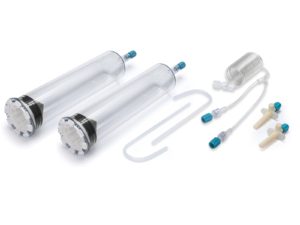
- CT injector syringes and tubing for the injectors that deliver these agents.
- Contrast media and pharmaceuticals across the full CT and MRI contrast line.
- About Spectrum Medical Imaging Co. and its 30+ years in medical imaging supply.
Source Omnipaque or Isovue for Your Imaging Center
Choosing between Omnipaque and Isovue comes down to matching each agent’s typical strengths to your patient population, imaging protocols, and purchasing relationships. Spectrum Medical Imaging Co. maintains a comprehensive contrast media inventory including both Omnipaque and Isovue, with nationwide shipping and 30+ years serving the medical imaging community. Our team provides guidance on concentration selection, volume planning, and budget alignment so your department has the right agent on the shelf when you need it.
Call 800-859-6162 to discuss current pricing and availability, or explore Omnipaque and Isovue directly. You can also request a quote to place your order today.
Frequently Asked Questions
What is the main difference between Omnipaque and Isovue? Omnipaque contains iohexol and is made by GE HealthCare, while Isovue contains iopamidol and is made by Bracco. Both are non-ionic, low-osmolar contrast agents with a similar overall safety profile. The practical difference many departments notice is emphasis: Omnipaque is often chosen for consistent general-purpose image quality, while Isovue is often chosen for strong vascular enhancement in angiography and cardiac CT. Many facilities stock both and select by study type.
Is Isovue better than Omnipaque for CT angiography? Isovue has a reputation for strong vascular enhancement, which is why many departments favor it for CT angiography, cardiac CT, and vascular mapping. Omnipaque is also used for vascular studies and performs well across a broad range of CT applications. The right choice depends on your specific protocols, scanner setup, and radiologist preference. A facility running a high volume of vascular or cardiac imaging may lean toward Isovue for that program specifically.
Are Omnipaque and Isovue equally safe for patients with kidney problems? Both agents belong to the same low-osmolar, non-ionic contrast class and carry a similar risk profile related to kidney function. Patients with significantly reduced kidney function face a higher risk of contrast-induced kidney injury regardless of which of the two agents is used. Facilities apply the same renal protection strategies, such as pre-hydration and minimizing contrast volume, for either agent. A blood test to check kidney function before contrast administration is standard practice with both.
Does cost differ significantly between Omnipaque and Isovue? Cost differences between the two agents are typically modest and vary more by purchasing agreement, volume, and group purchasing terms than by which agent you choose. Most departments find the per-dose economics broadly comparable between Omnipaque and Isovue. Total annual contrast spending depends more on case volume and contract terms than on the specific agent selected. A supplier quote based on your actual usage gives the clearest cost picture.
Can an imaging center stock both Omnipaque and Isovue? Yes, and many departments do exactly that to match the agent to the study type, using Omnipaque for general body and neuro imaging and Isovue for vascular and cardiac work, or vice versa, based on local preference. Stocking both also provides a supply buffer if one manufacturer experiences a temporary allocation constraint. Spectrum Medical Imaging Co. supplies both agents, so a facility can maintain flexible inventory from one supplier. Call 800-859-6162 to discuss stocking both for your department.